Making a Ripple in the Community
On Sunday, April 26th, 2026, a group of five students joined Mary and Mikayla, University of New England’s National Park Trust ambassadors, for a day dedicated to hard work, teamwork, and stewardship on Cow Island. Gathering early at the university’s Campus Center, the group loaded into the vans, ready
to spend the day volunteering alongside the local outdoor education organization Rippleffect in
the waters of Casco Bay.
Before heading north, the group made a quick spot to pick up lunch for the day ahead. The drive
to Portland was smooth until we encountered a maze of marathon-related stress closures winding
through the city. After a bit of rerouting and navigating crowded streets, the group hurried to the
boat launch where Rippleffect was waiting.
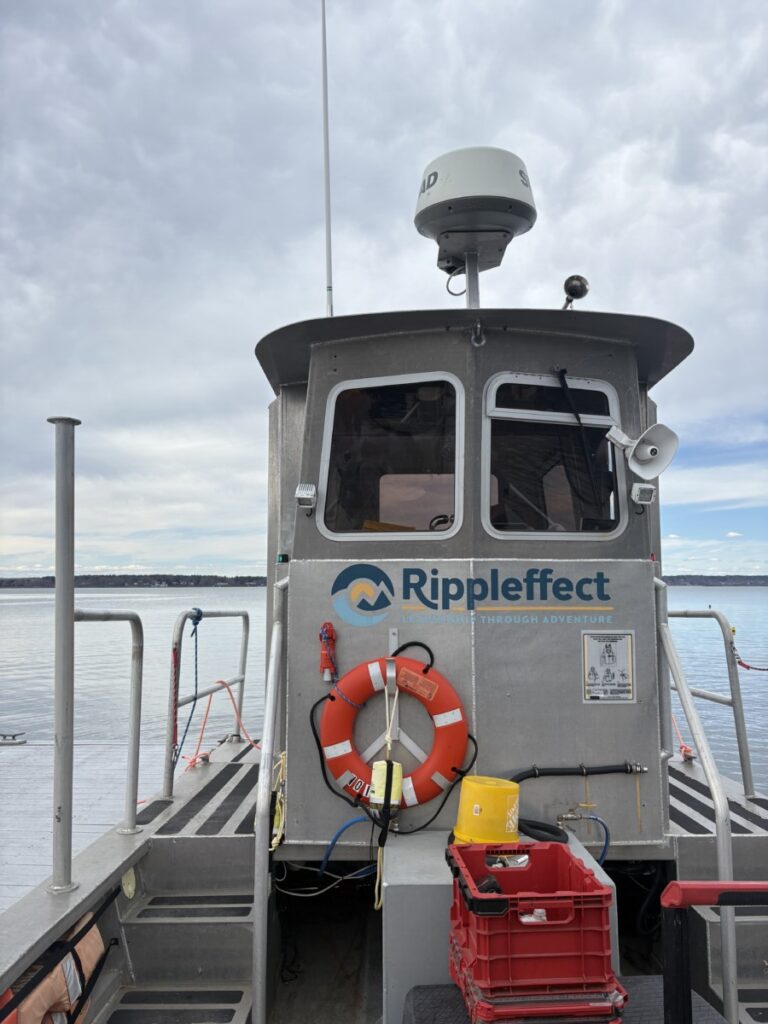
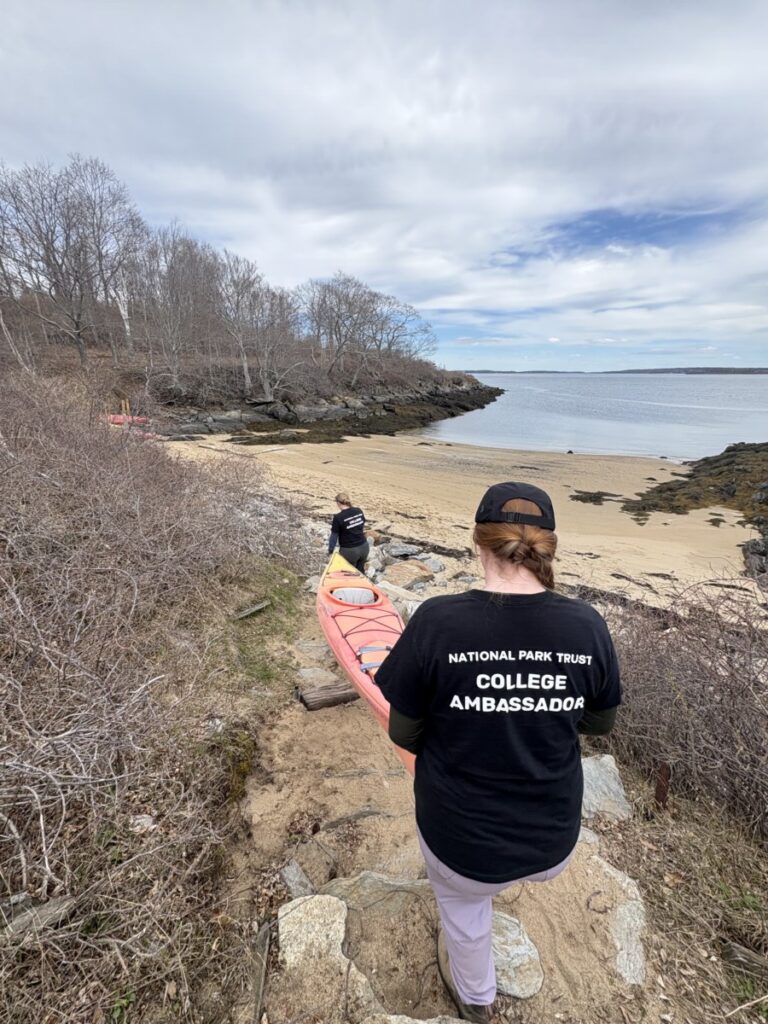
There, we met our partners for the day, Tony and Lydia, who immediately welcomed everyone
with a quick icebreaker to help the group get to know one another. Soon after introductions,
everyone climbed aboard Rippleffect’s boat and set off across the sparkling waters of Casco Bay.
The fifteen-minute ride to the 26-acre island was filled with sun rays peaking through the clouds,
salty ocean air, and sweeping views of the surrounding islands. Along the way, Tony and Lydia
shared stories about the history of the bay, offering insight into the neighboring islands and
explaining the many ways Cow Island is used by both the public and Rippleffect’s youth
programming.
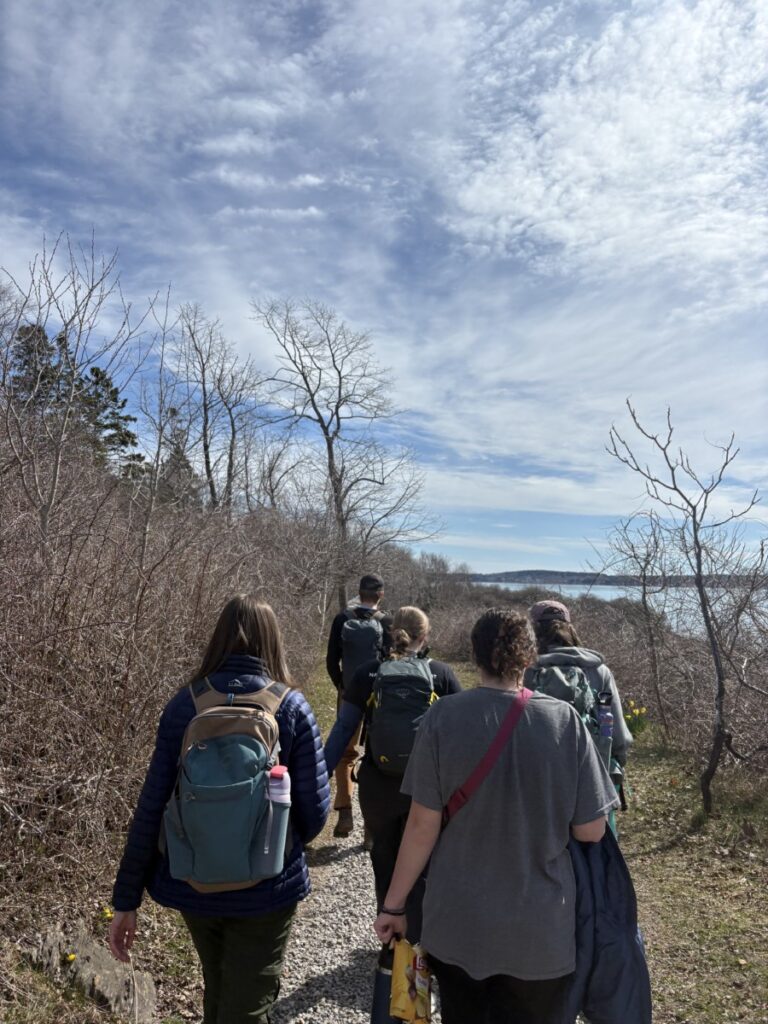
As the boat approached shore, the group disembarked onto the island’s boat ramp and followed a
winding path toward the center of camp, where meals are typically prepared during Rippleffect
programs. Backpacks were dropped, water bottles refilled, and snacks quickly eaten while Tony
outlined the work plan for the day.
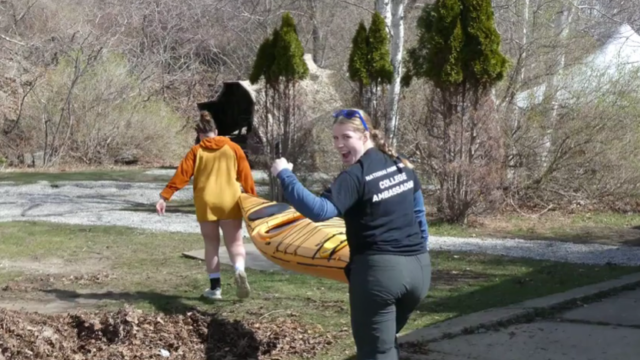
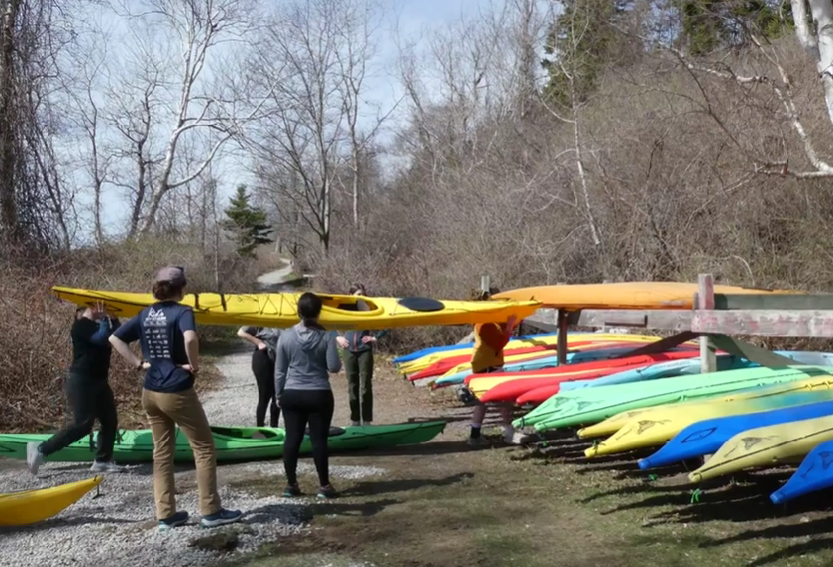
The group’s first task was deceptively challenging: moving roughly 35 kayaks out of a dark
bunker and onto an outdoor rack. While hauling kayaks may sound straightforward, the bunker
was cramped and nearly pitch black, forcing everyone to rely heavily on communication,
coordination, and teamwork. Kayaks had to be carefully maneuvered through tight spaces while
participants called directions back and forth to one another in the darkness. By the time the final
kayak was pulled free, the group had already learned how much collaboration the day would
require.
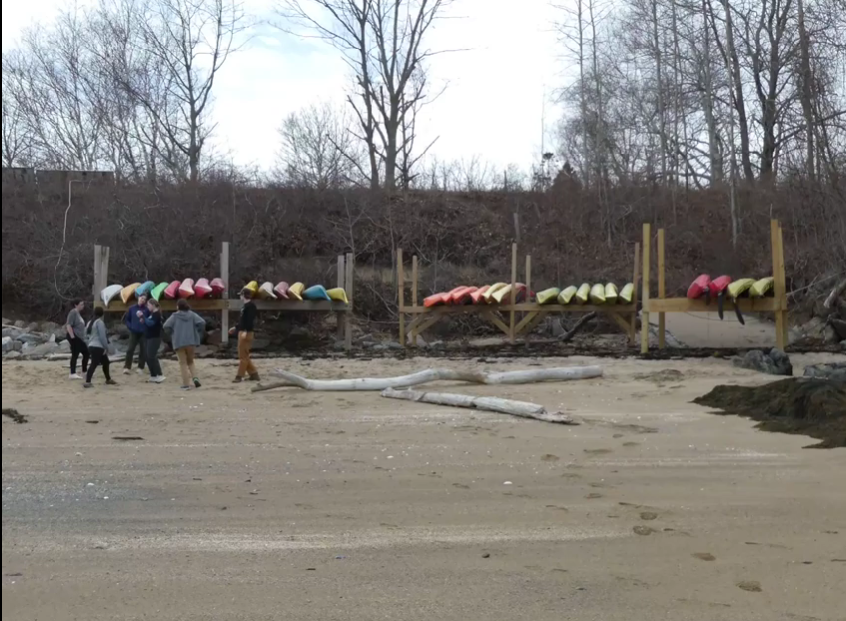
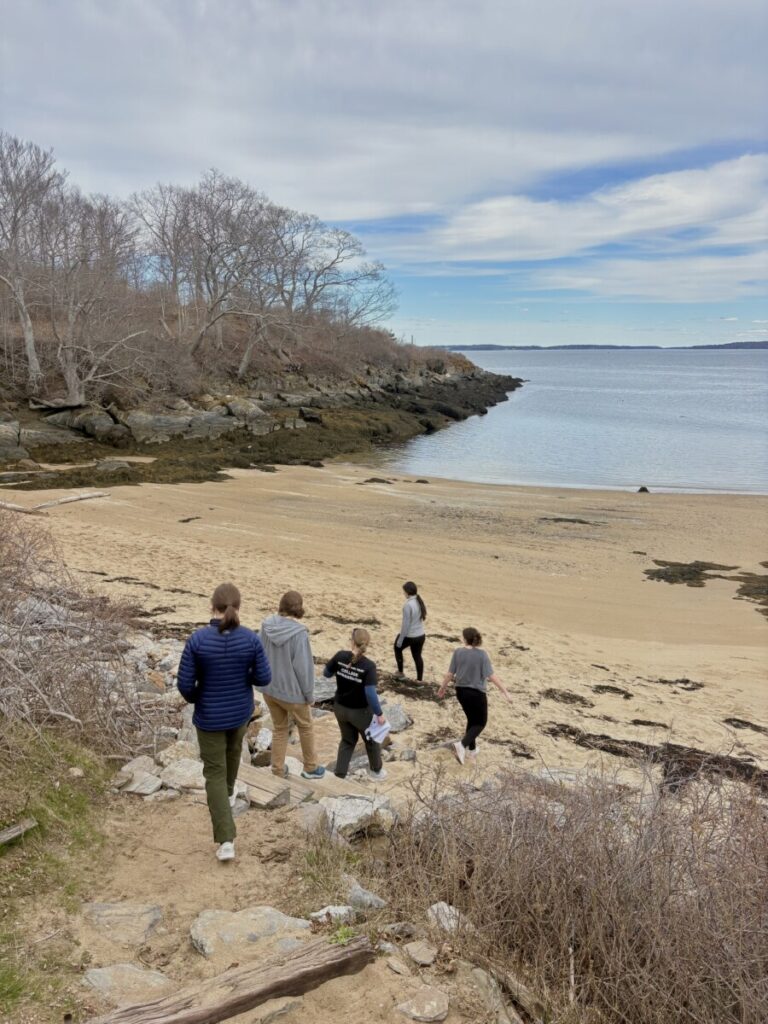
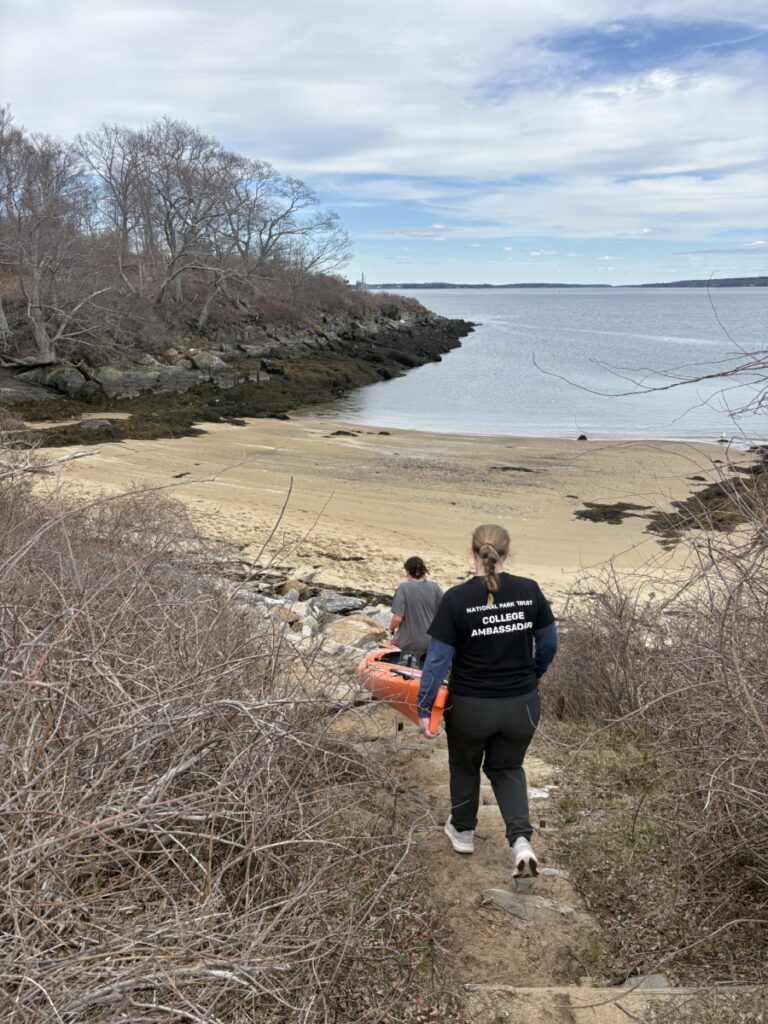
Once the kayaks were cleared out, the group traveled down to another beach on the island,
carrying piles of lumber and materials. The wood consisted of both old and new sections of
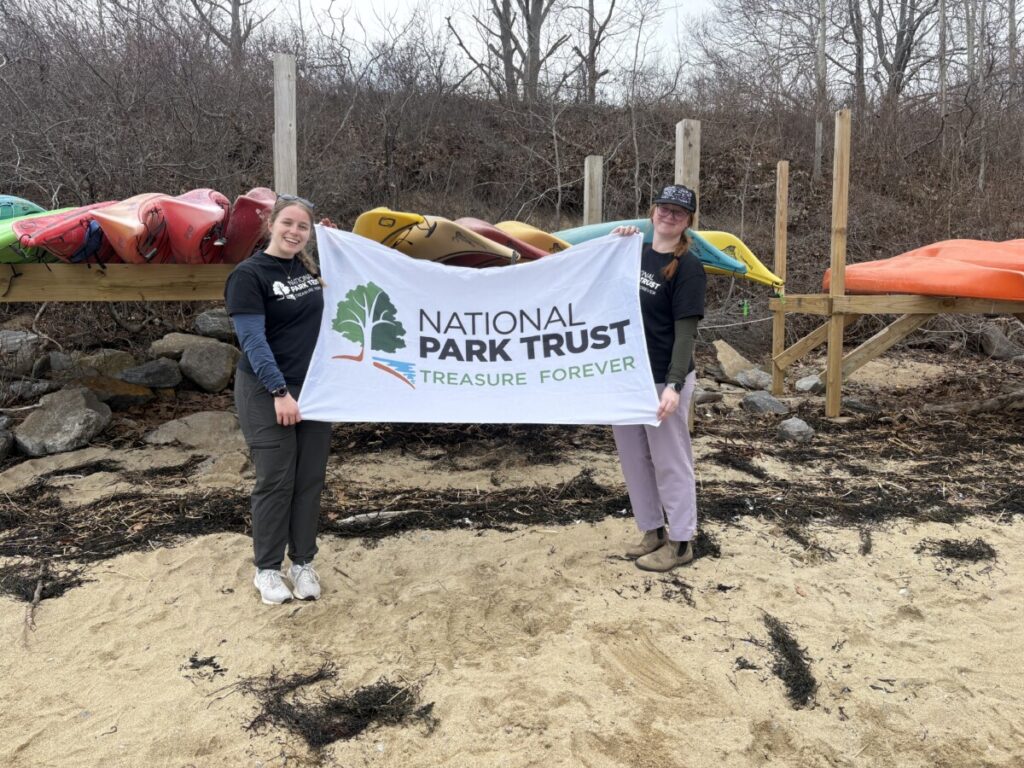
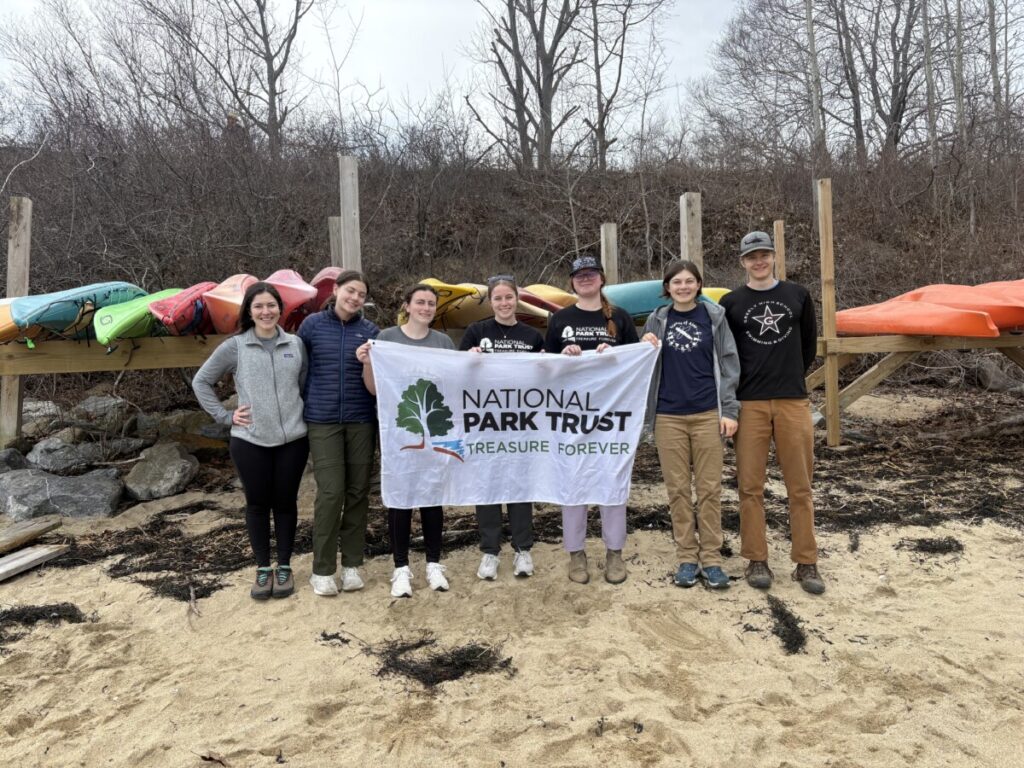
kayak racks that needed to be rebuilt directly on the shoreline. Surrounded by ocean views and the steady sound of waves, the group spent roughly two hours constructing the new racks by hand. Each rack featured multiple slots designed to securely hold kayaks, but building them evenly on the rocky beach proved to be no easy task. In some places, several layers of rocks had to be stacked underneath the structures just to level them out. Piece by piece, however, the racks slowly came together.
After a long stretch of physical work, the group finally took a well-earned lunch break. Sitting
together just as the program participants would, we shared food, swapped stories, and reflected
on the island around us. Conversations turned toward the mysterious concrete structures
scattered across many of the islands throughout Casco Bay. Tony explained that these remnants
actually dated back to World War II naval preparations. During the war, Casco Bay served as the
fifth most active port in the United States, despite never becoming a direct site of battle. For the
National Park Trust ambassadors, understanding this surrounding history added another layer of
meaning to the day’s service work. Preserving and maintaining these spaces meant protecting not
only the natural environment but also the stories tied to the region’s past.
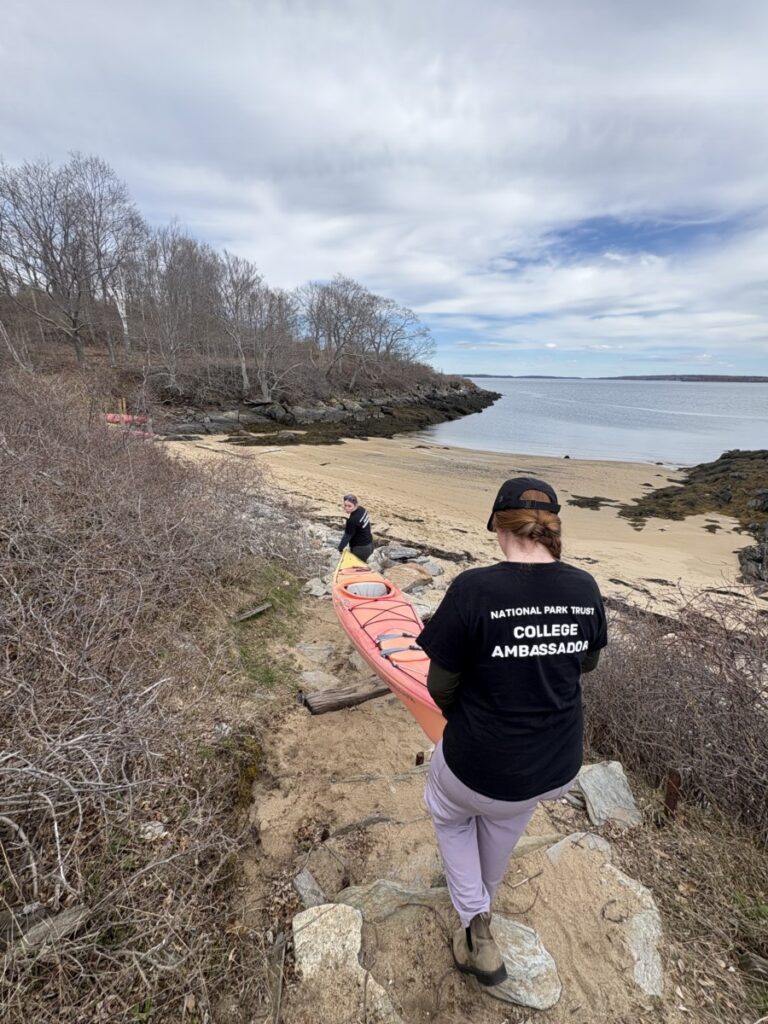
After lunch, the group tackled their final major project of the day: moving approximately 40
more kayaks onto the newly built racks on the beach. If teamwork had been important earlier in
the day, it became absolutely essential now. The kayaks had to be carefully carried down
staircases, maneuvered across uneven terrain, and then hoisted overhead onto the racks.
Communication was constant among the group as everyone worked together to safely transport
and store the boats. By the time the final kayak was secured into place, exhaustion had fully set
in, but so had a strong sense of accomplishment.
With the workday officially complete, we decided to reward ourselves by experiencing one of
the island’s more unique activities: the tunnel. Hidden within one of the old military structures,
the tunnel is a completely pitch-black passageway wrapping around the outside of a former
ammunition room. Rippleffect often uses the tunnel during youth programs to encourage
participants to face fears, remain calm in uncomfortable situations, and work through challenges
together. Much like UNE Outdoor Recreation’s philosophy of “challenge by choice,” the tunnel
offered participants an opportunity to push personal boundaries in a supportive environment.
Nervous laughter echoed through the darkness as group members carefully navigated the space,
making it a memorable and fitting end to the day.
As the sun slowly began to lower over the bay, the group climbed back aboard the boat and made
the quiet ride back to shore. After saying their goodbyes and thanking Tony and Lydia for the
experience, they loaded back into the vans and began the drive home to UNE. Before long, most
of the group had fallen asleep, worn out from hours of lifting kayaks, building racks, and
exploring the island. Their exhaustion only confirmed how much hard work had gone into the
day. Overall, it was an incredibly rewarding experience.
While we had made this connection through our advisor, Mira, a member of the Board of
Trustees for Rippleffect, we likely would not have partnered with the organization for a day of
volunteering. The support and encouragement of the National Park Trust gave us a day filled
with service, teamwork, history, and adventure.