University of Arizona Stewardship Outing: Buffelgrass Pull and Desert Museum Tour!
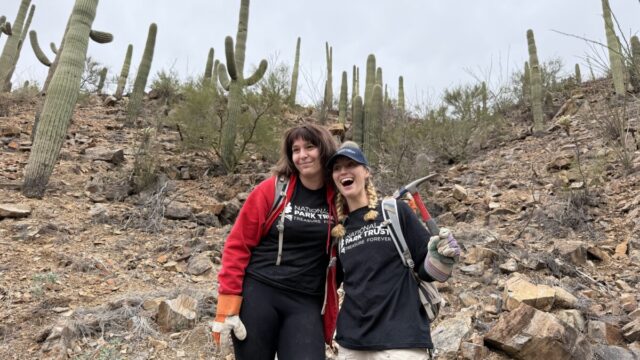
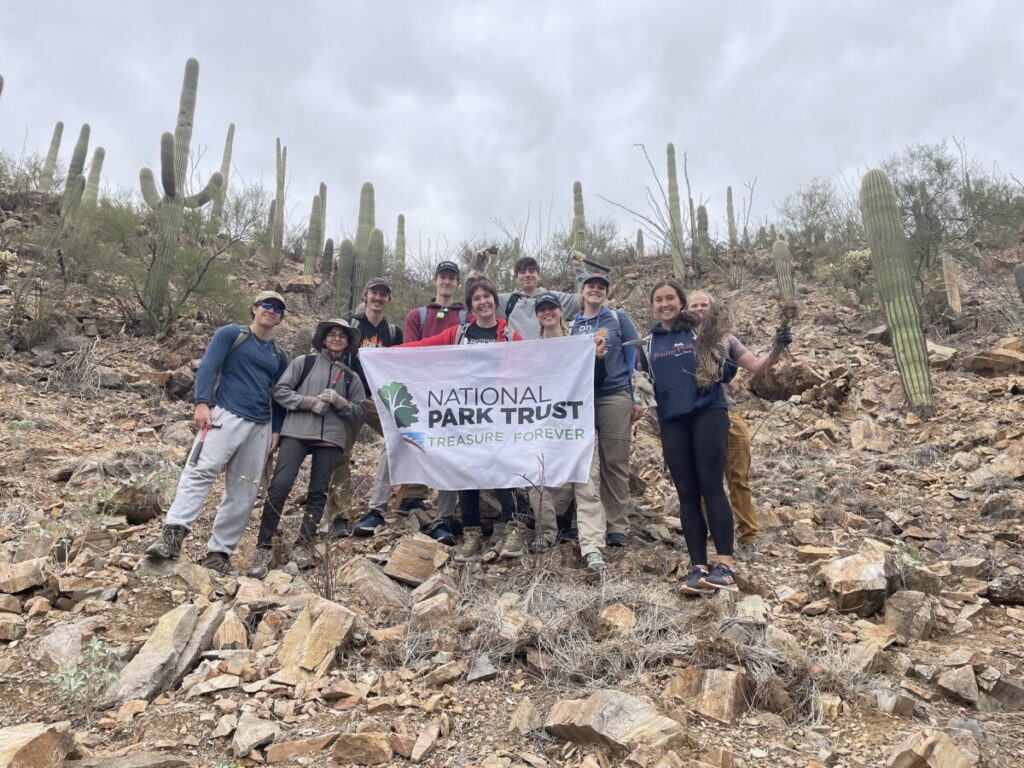
On Friday, November 21st, students from the University of Arizona ventured to the Tucson Mountain Park for the National Park Trust Stewardship Outing. Myself (Ryleigh Selby) and fellow National Park Trust Ambassador Meg Robertson drove eight students to the Arizona-Sonora Desert Museum, where we met up with Sonya Norman, a facilitator of the Sonoran Desert Weedwackers. Sonya organizes groups to remove buffelgrass, an invasive species spread across the Tucson desert. We hiked out into the desert, crossing from the Tucson Mountain Park into Saguaro National Park West, where we spent a few hours pulling the invasive species. Sonya gave a demo of how to remove buffelgrass most effectively, using a weeder hand tool to dig away the surrounding dirt and rocks, then pulling at the base of the plant to remove all the roots. We spent our time hacking away at the dirt, pulling the weeds, and piling them up to be covered with rocks, with the seeds buried away from the sun’s reach. Buffelgrass seeds can only regrow if exposed to sunlight, and regular removers of the species have observed that bagging the weeds can spread the seeds more than simply folding them under the grass and covering them with rocks.
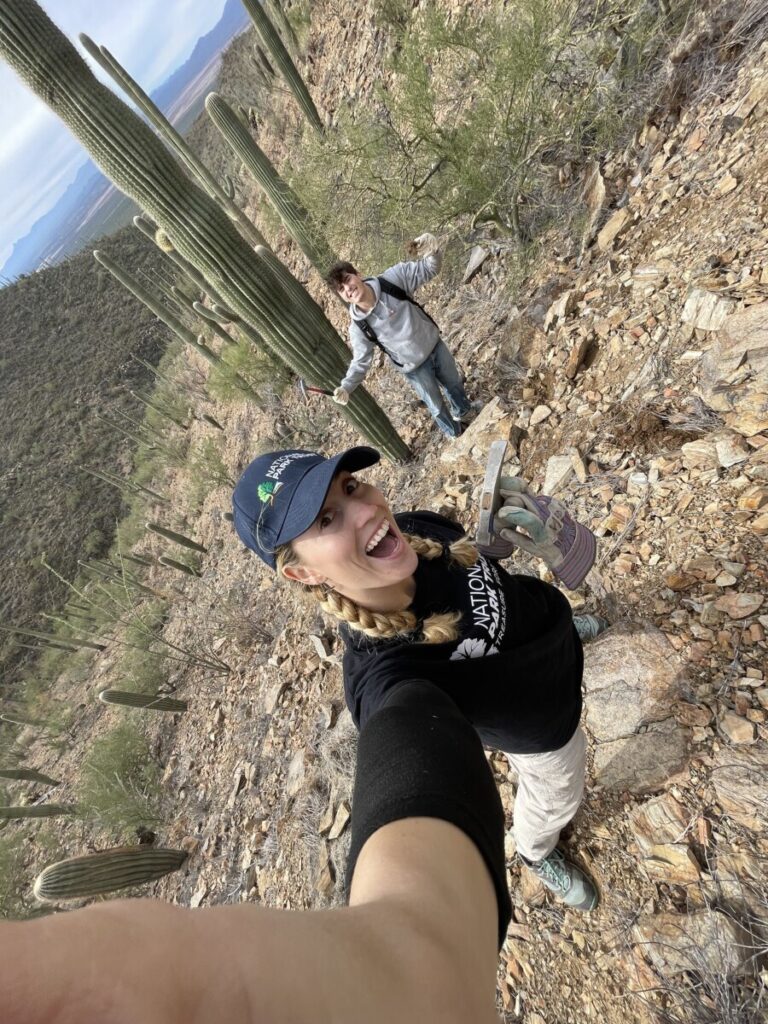


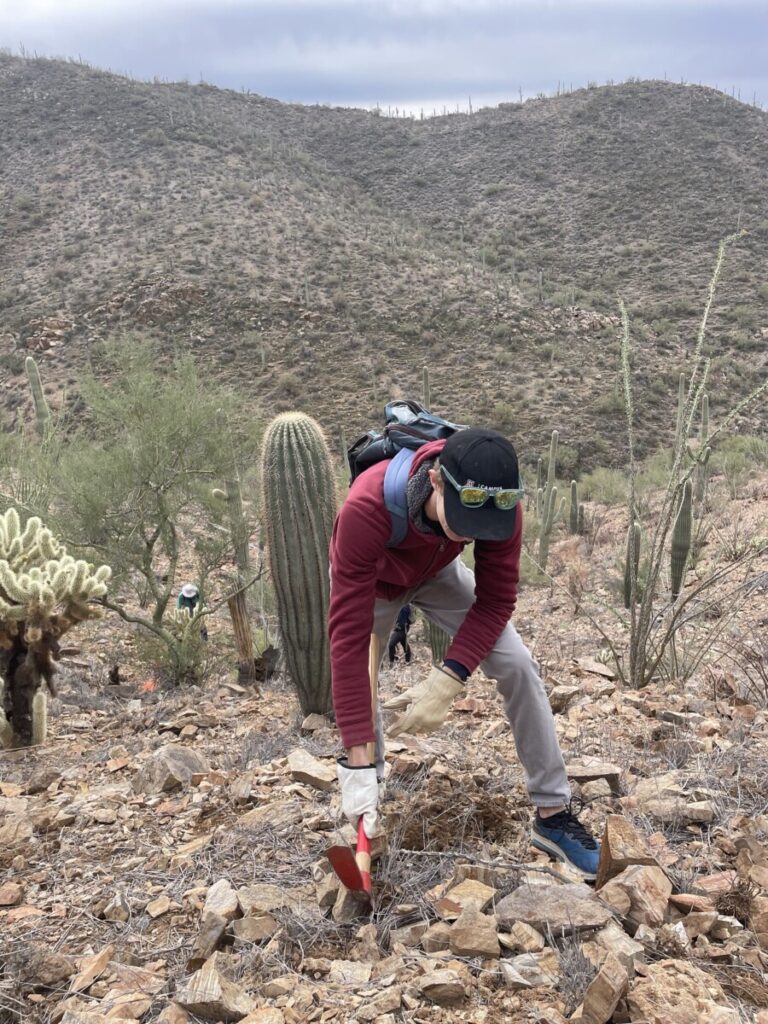
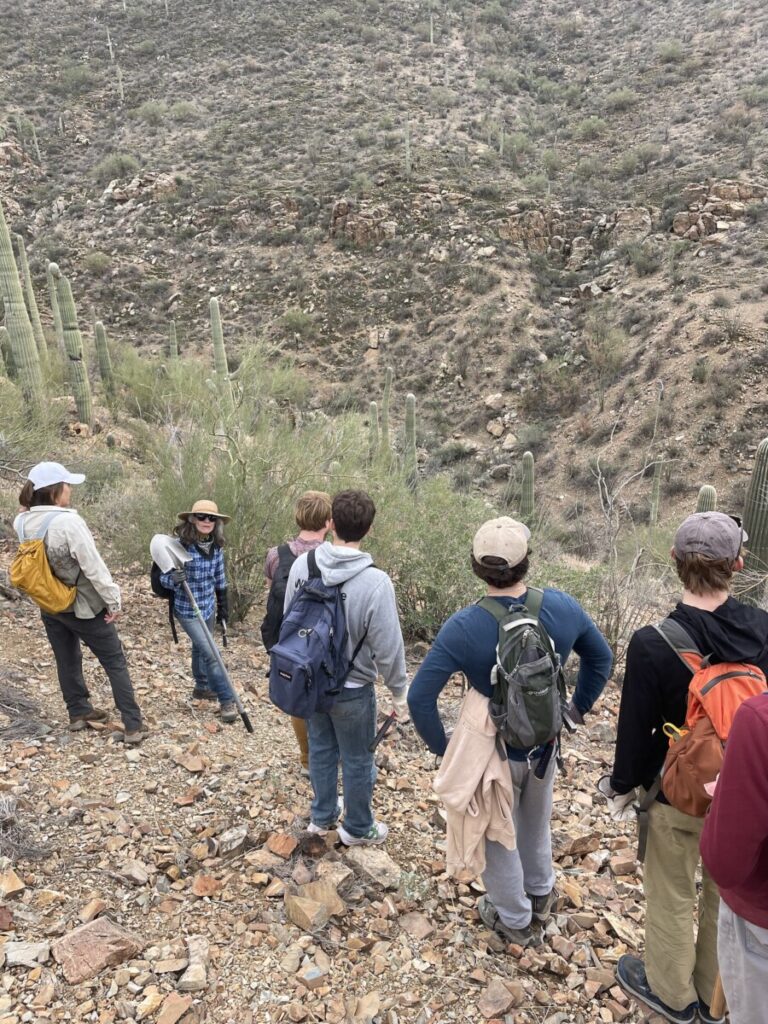
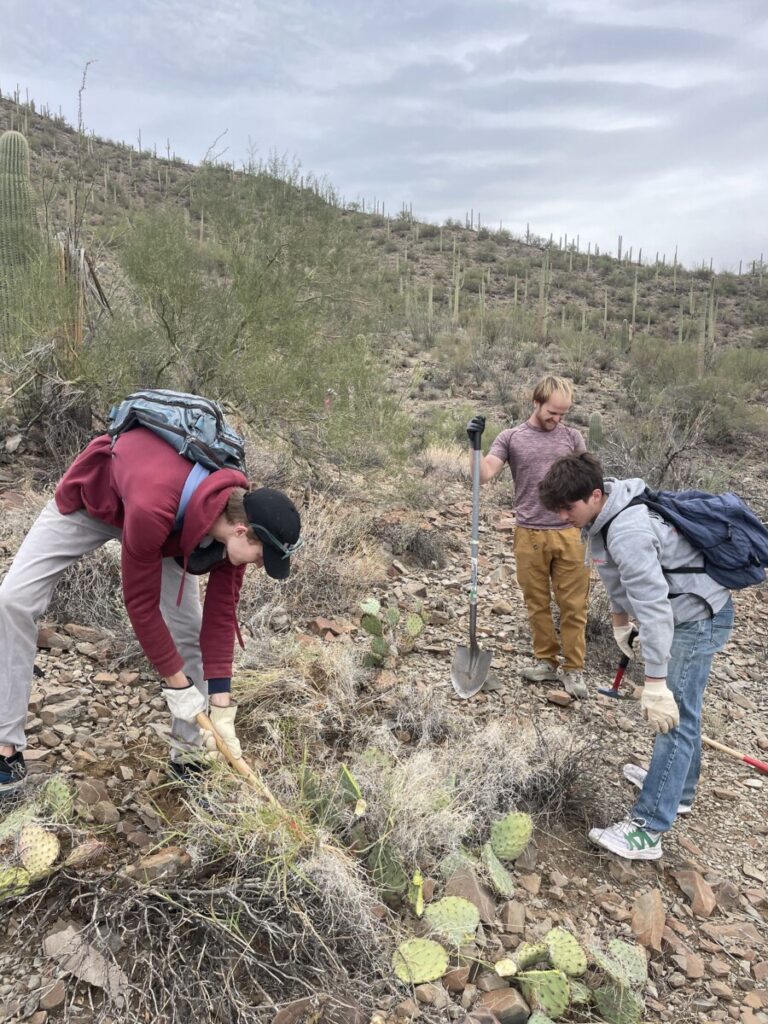
We mainly chose the Tucson Mountain Park / Saguaro National Park West because this is where Sonya regularly takes out groups to pull buffelgrass. She was excited to have a group of college students who could hike up the slope and finish a spot they’d been weeding for over a decade. It was an honor to fully rid this spot of buffelgrass, and doing so brought a great sense of accomplishment to our ambassadors and participants. Post-weeding, Sonya gave a presentation about buffelgrass- where it came from, why we’re removing it, and how we can prevent its spread. She told us about a project she recently completed where she brought sheep to Sentinel Peak, a prominent peak in the Tucson Mountains. The sheep grazed the buffelgrass over the course of several months, making it easier for people like the Sonoran Desert Weedwackers to use chemicals to kill the weeds or pull them manually. This presentation gave context to the stewardship work we were doing and inspired participants to go out and pull buffelgrass they saw in their day-to-day lives. Since the trip, I’ve had three participants tell me about or send me pictures of them pulling buffelgrass that they spotted around town. Their efforts to remove the species outside of the trip show their dedication to stewardship and the impact of the trip on their personal lives.
Our adventure concluded with free admission to the Arizona-Sonora Desert Museum, allowing participants and ambassadors to explore the museum at will. There were exhibits of all kinds of desert species, from large cats and javelinas to lizards and plants. The energy was especially high at this point in the outing. Participants were awake and stoked to see what the museum had to offer, revitalized by a feeling of completion after a day of weeding. Some stand-out moments from the outing were conversations we had while weeding, seeing the impact of Sonya’s grazing project with before and after pictures of Sentinel Peak, and everyone spotting their favorite creatures at the Desert Museum. This trip would not have been possible without the help of the National Park Trust. The requirement of a stewardship outing inspired ambassadors to do something specific to the Tucson region. Pulling buffelgrass was a perfect way to give back to the outdoor community we know and love out here in the desert.