Congaree National Park: Why It’s One of America’s Most Underrated Parks
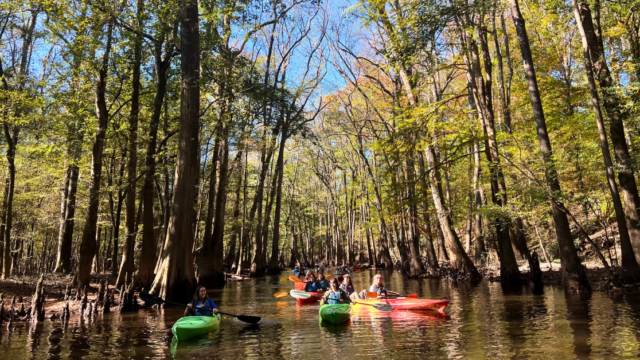
Congaree National Park stands as home to the largest intact expanse of old-growth bottomland hardwood forest left in the southeastern United States, drawing nearly 290,000 visitors annually to explore its towering champion trees and quiet, water-carved floodplain.
Ask most people to name a national park and you’ll hear Grand Canyon National Park, Arizona, Yosemite National Park, California, or Great Smoky Mountains National Park, Tennessee, before you hear Congaree National Park, South Carolina. That’s part of what makes it special. Tucked into the floodplain of the Congaree and Wateree Rivers about 18 miles southeast of Columbia, Congaree protects one of the most biodiverse and least-visited landscapes in the National Park System — a swamp forest of bald cypress, loblolly pine, and champion trees so plentiful that the park holds the highest concentration of champion-sized trees anywhere in North America.
Congaree doesn’t have a single iconic overlook or a famous rock formation. What it has instead is a slower, stranger kind of wonder: a boardwalk that carries you above a wetland alive with owls and woodpeckers, a canoe trail that winds through flooded forest, and, for about a week each May, a synchronized light show performed entirely by fireflies. For visitors willing to trade crowds for quiet, it’s one of the National Park Service’s true hidden gems.
Quick Facts About Congaree National Park
- Location: Hopkins, South Carolina, about 18 miles southeast of Columbia
- Established: Designated a national park on November 10, 2003, after nearly three decades of protection as a national monument; a portion has been a designated wilderness area since 1988
- Size: More than 26,000 acres
- Known for: The largest intact old-growth bottomland hardwood forest in the southeastern United States, national and state champion trees, and an annual synchronous firefly display
- Annual visitors: Nearly 290,000
- Nearest city: Columbia, South Carolina
- Best time to visit: Fall through spring, when temperatures are milder, water levels are higher for paddling, and mosquitoes are less of a factor
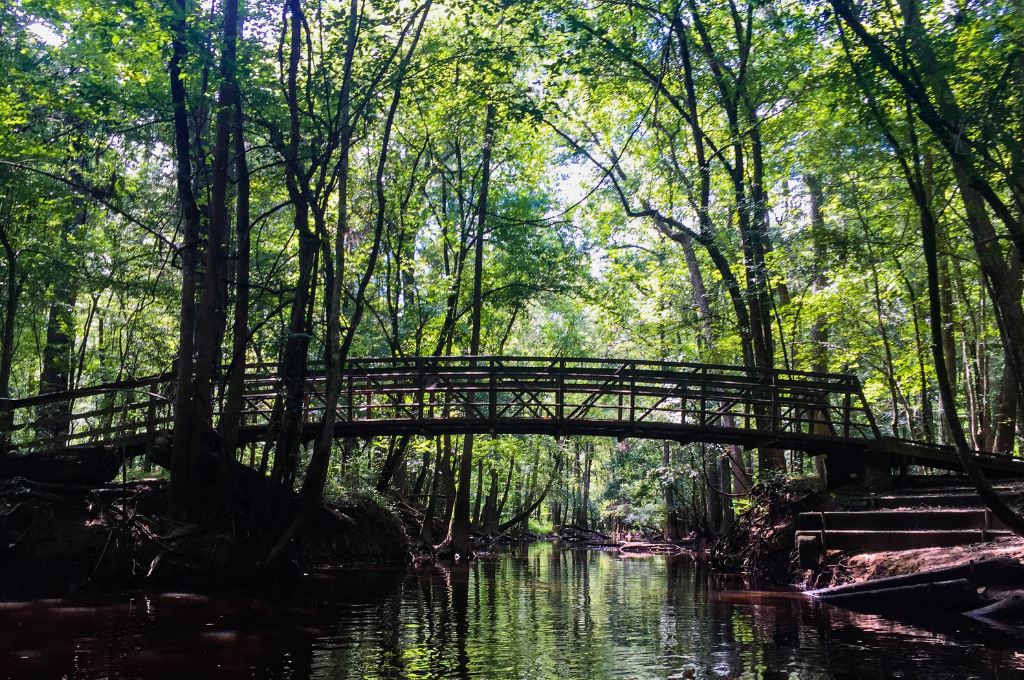
Why Congaree Is One of the National Park System’s Best Hidden Gems
Congaree doesn’t draw the crowds that flock to the Grand Canyon or the Great Smoky Mountains, but it holds its own in a category few other parks can claim: forest canopy height. The Congaree and Wateree Rivers regularly overflow their banks and sweep across the floodplain, depositing nutrient-rich sediment that has fed this ecosystem for centuries. That nutrient cycle, combined with the fact that this stretch of forest largely escaped large-scale logging, has produced one of the tallest and most biodiverse temperate forests on Earth.
The result is a canopy of national and state champion trees, including a loblolly pine that tops 160 feet, along with towering sweetgums and cherrybark oaks. Bald cypress trees, with their flared, water-worn trunks, rise straight out of the swamp throughout the park, giving Congaree its signature look even where they aren’t record-holders themselves. It’s a landscape that rewards visitors who slow down and look up.
Exploring the Swamp, Floodplain, and Champion Trees
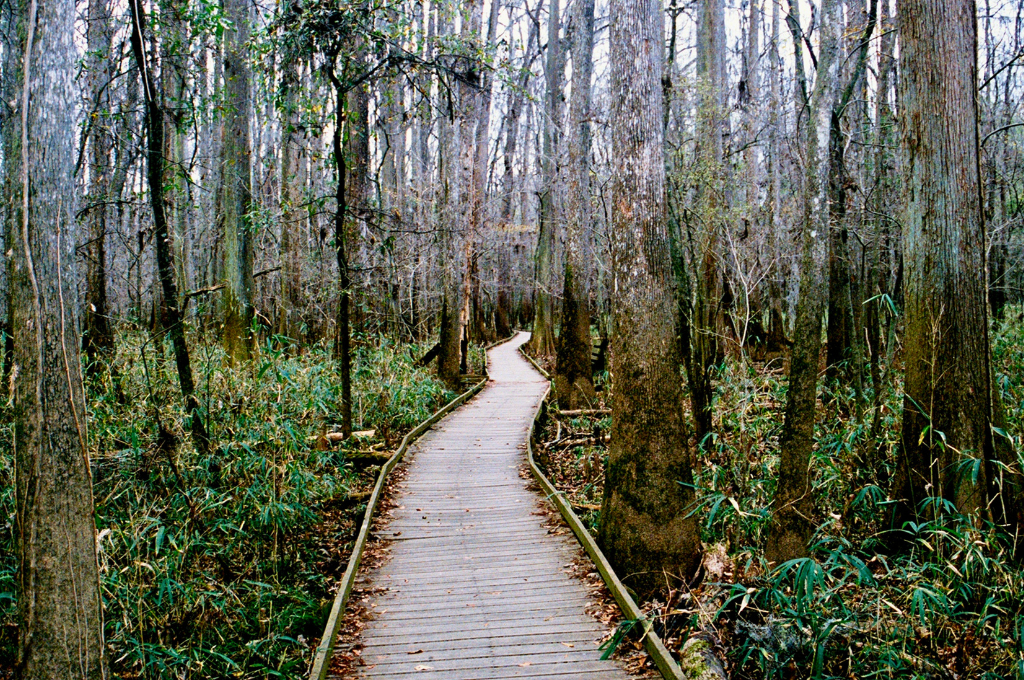
The heart of Congaree is its old-growth bottomland hardwood forest, a wetland ecosystem shaped entirely by water. Sloughs, oxbow lakes, and seasonal floodwaters move through the floodplain in slow, cyclical patterns, creating habitat for an unusually wide range of plants and animals in a relatively small footprint. Cypress trees and tupelo dominate the lowest, wettest ground, while loblolly pine and hardwoods take over on slightly higher terrain.
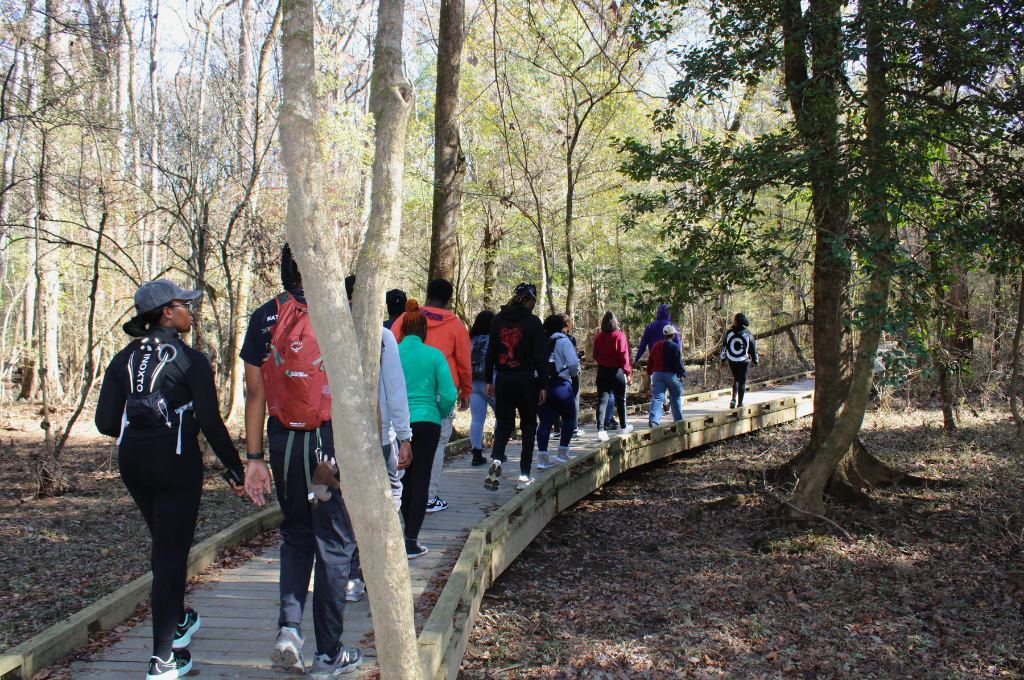
The easiest way to take it all in is the Boardwalk Loop, a 2.6-mile elevated boardwalk trail that winds through the swamp without requiring visitors to get their feet wet. It’s accessible, family-friendly, and usually the first stop for visitors. For a shorter option, the Bluff Trail offers a 1.8-mile introduction to the park’s upland forest near the visitor center.
On the Water: Cedar Creek, Kayaking, and the Congaree River Blue Trail
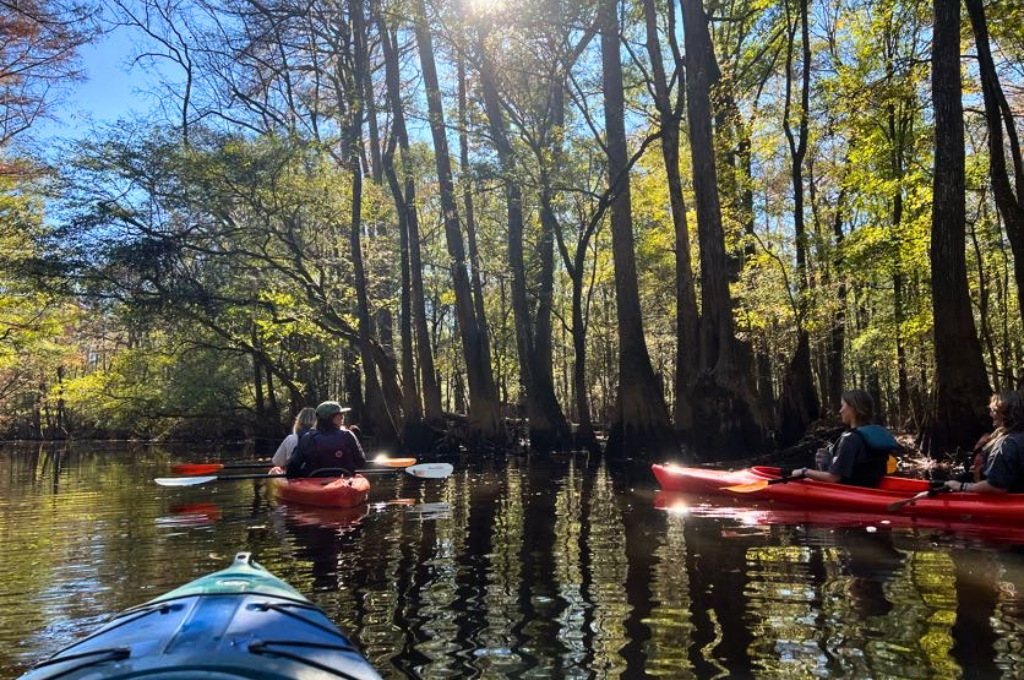
Congaree is best experienced from a canoe or kayak. Cedar Creek winds through the heart of the floodplain, and the marked Cedar Creek Canoe Trail follows it for miles through cypress-tupelo swamp, past champion trees rising straight out of the water. It’s a quiet, shaded paddle, and a popular way to reach parts of the park that hiking trails can’t.
For a longer trip, paddlers can join the Congaree River Blue Trail, a 50-mile marked paddling route that runs from Columbia downstream to the park, passing from an urban stretch of the Congaree River into the high bluffs and floodplain forest that define Congaree’s landscape. Fishing is also popular along both the river and the park’s sloughs and creeks, where anglers can find catfish, bream, and other native species — a South Carolina fishing license is required.
Hiking Trails and the Boardwalk Loop
Beyond the Boardwalk Loop, Congaree offers more than 48 miles of hiking trails through the floodplain and surrounding uplands. The Weston Lake Loop Trail (4.5 miles) circles an oxbow lake favored by wading birds, while the Oakridge Trail (7.1 miles) pushes deeper into stands of old-growth hardwoods. The Kingsnake Trail, at 12 miles, is the park’s longest route, connecting to the River Trail and Oakridge Trail to reach some of the most remote sections of the forest.
Backcountry camping is allowed throughout most of the park with a free permit, giving experienced hikers and paddlers the chance to spend a night deep in the floodplain, away from the boardwalk crowds.
Wildlife and Biodiversity
Congaree’s floodplain supports a surprisingly biodiverse mix of wildlife for a park many visitors have never heard of. White-tailed deer are a common sight along the trails, and river otters can sometimes be spotted working the creeks and sloughs. Alligators live in the park’s deeper waters, and turtles and snakes, including several nonvenomous species, are frequently seen basking along the boardwalk and trails. Bobcats, armadillos, and nearly 200 recorded species of birds round out a food web built almost entirely around the rhythm of flooding and drought.
Synchronous Fireflies: A Rare Natural Phenomenon
For about a week each May, Congaree hosts one of its most famous — and most fleeting — natural events. Synchronous fireflies, one of only a few firefly species in North America known to flash in unison, light up the forest floor in coordinated pulses after dark. The National Park Service manages visitor access during the peak viewing window through a lottery system, reflecting both the popularity of the event and the park’s commitment to protecting the fragile habitat the fireflies depend on.
A Landscape Shaped by Logging and Conservation
Congaree’s old-growth forest survived almost by accident. Cypress logging operated in the area from the late 1890s into the early 1900s, but the difficulty of hauling timber out of the swamp left much of the forest untouched. Journalist Harry Hampton, the visitor center’s namesake, began advocating for the forest’s protection in the 1950s, and when a logging company moved to harvest the swamp again in the 1960s, that renewed threat helped galvanize a grassroots campaign that ultimately secured its protection, first as Congaree Swamp National Monument in 1976 and later as a national park in 2003.
That history is part of a broader cultural heritage layered into the landscape, from Native American use of the floodplain to enslaved and free Black communities who worked the surrounding lowcountry. In 1983, UNESCO designated the surrounding Congaree Biosphere Region in recognition of both its natural resources and its cultural history.
Planning Your Visit
Entrance fee: Congaree National Park is free to enter, a rarity among national parks.
Visitor center: The Harry Hampton Visitor Center, near the park entrance, is the best first stop for trail maps, ranger programs, and current water levels on the boardwalk and trails.
Campgrounds: Congaree offers two frontcountry campgrounds, Longleaf and Bluff, both reservable through Recreation.gov, along with backcountry camping by free permit for those looking to spend a night deeper in the floodplain.
Getting there: The park sits roughly 30 to 45 minutes from downtown Columbia, South Carolina, depending on traffic, making it an easy day trip or an overnight add-on to a longer South Carolina itinerary.
Best time to visit: Fall, winter, and spring bring milder temperatures and fewer mosquitoes than summer, when the swamp’s humidity and insect activity are at their peak. Water levels also tend to be higher in winter and spring, which makes for better kayaking and canoeing conditions on Cedar Creek.
Make It a South Carolina Getaway
Congaree pairs naturally with a visit to Columbia, South Carolina, just a short drive away, or with a longer swing through the Southeast’s national parks. Visitors road-tripping from Great Smoky Mountains National Park or planning a broader tour that includes far-flung parks like Grand Canyon National Park often find Congaree is the quiet counterpoint worth the detour: fewer crowds, no entrance fee, and a completely different kind of wilderness.
Why Protecting Parks Like Congaree Matters
Congaree is a reminder that some of the country’s most remarkable natural places aren’t always the ones swarming with crowds. Protecting old-growth ecosystems like this floodplain forest preserves more than scenery — it protects some of the tallest trees, most biodiverse habitat, and rarest natural events left in the eastern United States. It also means the next generation of visitors, including kids who may never have set foot in a swamp or a national park, will have the chance to walk the boardwalk and understand why this land is worth protecting.
How You Can Help Protect National Parks
Your support helps National Park Trust protect at-risk land in and around national parks like Congaree and gives more young people and families the chance to experience places like this firsthand. Learn about ways to support our mission.
FAQ — Visiting Congaree National Park
Where is Congaree National Park located? Congaree National Park is in central South Carolina, near Hopkins, about 18 miles southeast of Columbia.
Is there an entrance fee? No. Congaree is one of the few national parks with free admission.
What is Congaree known for? Congaree protects the largest intact expanse of old-growth bottomland hardwood forest in the southeastern United States, including national and state champion trees, a rich floodplain ecosystem, and an annual synchronous firefly display.
What is the best time to see the synchronous fireflies? The fireflies typically synchronize for about a week each May. The National Park Service runs a lottery system for parking access during the peak viewing period.
Can you kayak or canoe at Congaree? Yes. The Cedar Creek Canoe Trail winds through the swamp, and paddlers can also access the Congaree River and the longer Congaree River Blue Trail.
How many days do you need? A single day is enough to walk the Boardwalk Loop and explore the visitor center, but an overnight stay at Longleaf or Bluff Campground allows time for a longer hike or a paddle down Cedar Creek.
About National Park Trust
National Park Trust is an independent, nonpartisan 501(c)(3) nonprofit that has protected national park land since 1983, acquiring missing pieces of our national parks and benefiting 58 national park sites nationwide. Our mission is to preserve parks today and create park stewards for tomorrow.
Our youth education and family initiatives — Buddy Bison School Programs, College Ambassador Program, and Military Family Programs, along with National Kids to Parks Day — connect tens of thousands of people to the outdoors each year.
We believe public parks, lands, and waters should be cared for, enjoyed, and preserved by all, for current and future generations. Learn more at parktrust.org.