
Behind the Trail: How National Park Trust Helped Protect Land for the Marquette Greenway at Indiana Dunes
National Park Trust helped untangle decades of land ownership challenges at Indiana Dunes National Park, Indiana, clearing the way for a new stretch of the Marquette Greenway that connects Gary neighbors and park visitors to the dunes and Lake Michigan.
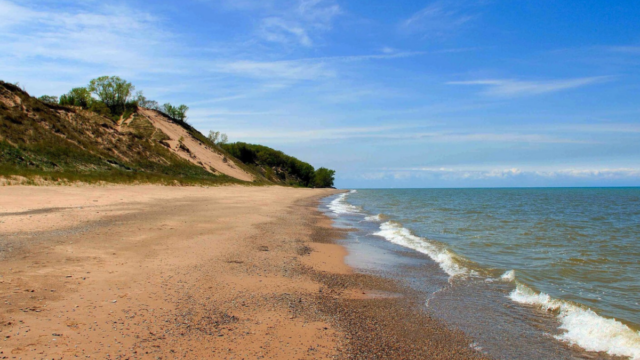
A new stretch of the Marquette Greenway now links the Paul H. Douglas Center for Environmental Education to West Beach at Indiana Dunes National Park, Indiana. Behind the greenway coming to fruition was a jigsaw puzzle of land that National Park Trust helped solve.
For decades, visitors to Indiana Dunes National Park couldn’t easily get from the Paul H. Douglas Center for Environmental Education to the West Beach without driving. Today, a new nearly 3-mile section of the Marquette Greenway links the two along an old rail bed that begins in the city of Gary, Indiana’s Miller neighborhood.
What most people on the trail don’t know is how long it took to secure the land underneath, or that National Park Trust, an independent nonprofit that protects national park land, helped make it possible. Here’s what we did, and why it matters.
At a Glance
- Where: Indiana Dunes National Park, Indiana
- What: 21 parcels of former railroad land needed for the Marquette Greenway
- National Park Trust’s role: Funding and real estate expertise to resolve long-standing ownership questions
- Result: A new walking and biking trail connection between the Paul H. Douglas Center and West Beach
- Who it helps: Gary residents and neighboring communities now have access to a national park, recreation, and their local landscapes
Why It Matters for the Community
For families in Gary and nearby communities, Indiana Dunes is close to home, but without a car or a safe route, it can still feel out of reach. The new trail begins right in the Miller neighborhood, giving neighbors a safe, car-free way to walk or bike to the park’s trails, dunes, and Lake Michigan shore.
That kind of everyday access changes what a national park can be. It becomes a place a family can head to on a Saturday morning, and where kids can grow up knowing the dunes and the lake are part of their own backyard. For people who haven’t always had easy access to national parks, a trail that starts close to home can be the beginning of a lasting connection to the outdoors.
The new section is also part of the larger Marquette Greenway, a planned 60-mile trail from Chicago, Illinois, to New Buffalo, Michigan, designed to connect communities across three states to the outdoors.
A Land Puzzle Decades in the Making
The trail follows an unused rail line across land that had been divided, sold, and eventually abandoned over the course of more than a century. By the time the park set out to acquire the land, there was no clear title to most of the parcels and no clear way to get one. For more than 20 years, the land stayed out of reach.
How National Park Trust Stepped In
Starting in 2019, National Park Trust provided the funding and real estate expertise needed to untangle those ownership questions. Our support covered legal work, title research, and the due diligence that clears the way for an acquisition.
Working alongside the National Park Service and the City of Gary, our work allowed the land to be permanently protected. Today, the National Park Service itself owns most of the parcels, and more are expected to be transferred to the National Park Service in the coming months.
“Gary is one of our critical gateway communities, and this trail makes it easier for our neighbors there to walk or bike to the dunes and Lake Michigan, right in their own backyard. National Park Trust helped resolve complicated land ownership challenges that stood in the way for decades. We’re grateful for their persistence and partnership in protecting this corridor and making this connection possible,” shared Leo Lestino, Acting Superintendent at Indiana Dunes.
Title searches and court filings rarely make headlines. But they’re often what stands between a park and the land it has been trying to protect for decades.
Why It Matters for the Park
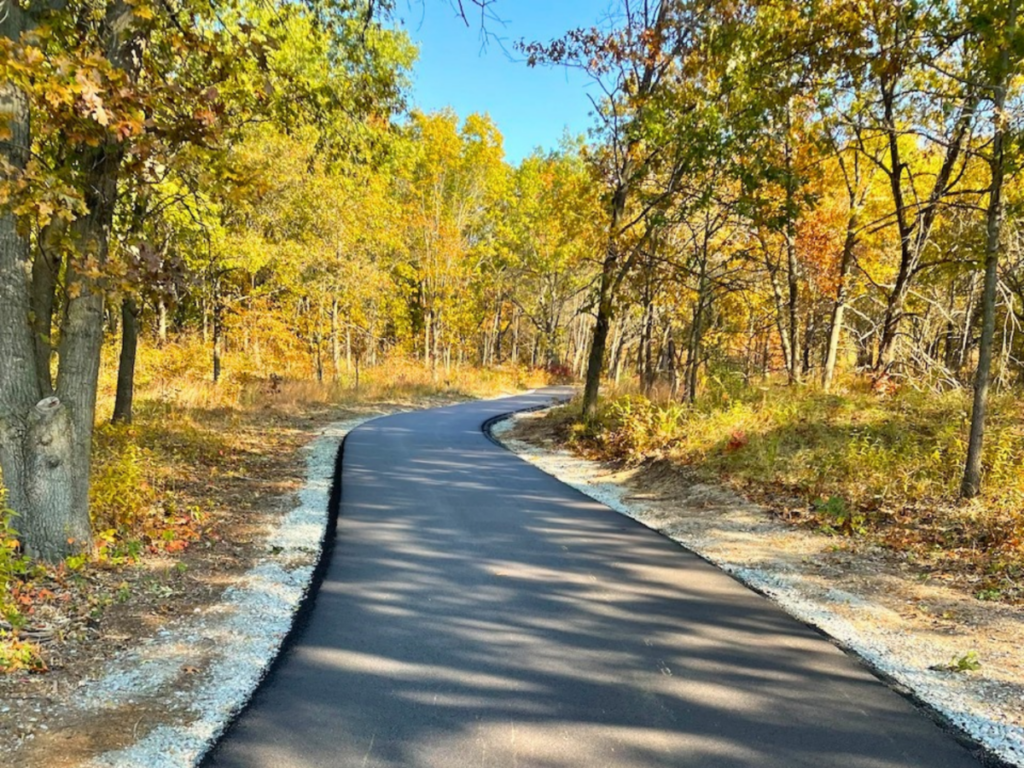
For years, visitors could reach one part of Indiana Dunes National Park but not the next without getting back in their car. The new trail gives hikers and cyclists a safe, car-free route between the Douglas Center and West Beach, through some of the park’s most remarkable landscape, including black oak savanna, a globally rare habitat that requires occasional fire to stay healthy.
Protecting this corridor also secures land the National Park Service relies on to care for this part of Indiana Dunes, now and for the long term.
Thank You
To everyone who gives to National Park Trust: thank you. Your generosity made it possible for us to step in at Indiana Dunes when the park needed help. Every person who walks or rides this new section of the Marquette Greenway is enjoying something you made possible.
We’re also grateful to our partners at Indiana Dunes National Park, the City of Gary, and the Legacy Foundation of Merrillville, whose persistence carried this work across the finish line.
You Can Protect More Park Land Like This
There’s more land like this waiting to be protected all across the country. By giving, you protect places before they are lost and you open new ways for people to experience our national parks. Learn about ways to lead this important work.
About National Park Trust
National Park Trust is an independent, nonpartisan 501(c)(3) nonprofit that has protected national park land since 1983, acquiring missing pieces of our national parks and benefiting 58 national park sites nationwide. Our mission is to preserve parks today and create park stewards for tomorrow.
Our youth education and family initiatives — Buddy Bison School Programs, College Ambassador Program, and Military Family Programs, along with National Kids to Parks Day — connect tens of thousands of people to the outdoors each year.
We believe public parks, lands, and waters should be cared for, enjoyed, and preserved by all, for current and future generations. Learn more at parktrust.org.