
Nevada National Parks & National Park Service Sites: A Complete Guide
Nevada is home to two official national parks: Great Basin National Park and Death Valley National Park, which Nevada shares with California. Its public lands go well beyond those two. Nevada’s National Park Service sites also include Lake Mead National Recreation Area, Tule Springs Fossil Beds National Monument near Las Vegas, and national historic trails that cross the state, including the Pony Express route.
Together these places protect Nevada’s range of landscapes: ancient bristlecone pines and alpine lakes in the high country, Mojave Desert sand dunes and salt flats, and reservoirs along the Colorado River. They also preserve Ice Age fossils, petroglyphs, and the history of early western travel.
At National Park Trust, an independent 501(c)(3) nonprofit dedicated to protecting parks early and expanding access, we believe these places matter for long-term stewardship as well as recreation. People who hike a trail or stargaze under a dark sky are more likely to care about protecting them.
How Many National Park Service Sites Are in Nevada?
Nevada has:
- 2 National Parks
- 2 additional National Park Service sites
These include:
- A national recreation area: Lake Mead National Recreation Area, shared with Arizona
- A national monument: Tule Springs Fossil Beds National Monument in the Las Vegas Valley
- National historic trails: the California, Old Spanish, and Pony Express national historic trails also cross Nevada
Together, these places tell the ecological and cultural story of Nevada.
The Two National Parks in Nevada
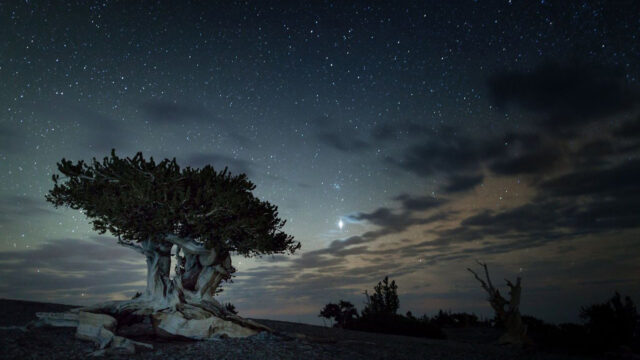
Great Basin National Park (Baker, Nevada): Great Basin National Park occupies the high country of Nevada’s remote Snake Range, where Wheeler Peak rises to more than 13,000 feet. The park is known for its bristlecone pines, one of the longest-lived species on Earth. A bristlecone in the park was estimated at about 4,900 years old when it was cut in 1964. Hiking trails lead to alpine lakes and groves of these ancient trees, and the Wheeler Peak Scenic Drive climbs into the high country.
Lehman Caves, the park’s best-known cave, offers ranger-led tours. The park’s remote location also makes it one of the best places to see the Milky Way, and it has a good variety of wildlife and excellent birdwatching.
The town of Baker, Nevada, is the park’s gateway community, and campgrounds in the park offer another way to stay close to the night sky and the high country.
Death Valley National Park (California and Nevada): Death Valley bills itself as the lowest, driest, and hottest national park, and all three claims are true. Badwater Basin sits 282 feet below sea level, the lowest point in North America, yet Telescope Peak rises to more than 11,000 feet just a short distance away. Summer temperatures regularly top 120°F, and the park’s official record of 134°F, set in 1913, is among the highest air temperatures ever reliably recorded on Earth. Rainfall is minimal, often just a couple of inches a year.
The Mojave Desert landscape is rich in geological features, including colorful rock layers, volcanic deposits, and exposed fossils. Unusual formations include the Devil’s Golf Course, a field of jagged salt crystals so rough that, as the old saying goes, only the devil could play golf on it. Despite the harsh conditions, the park supports surprising life, from desert bighorn sheep to wildflowers that bloom in years with good winter rain.
Although most of the park lies in California, a portion extends into Nevada along its eastern edge. The park is also reached from several Nevada towns. Beatty, at the park’s northeast edge, and Pahrump, to the southeast, serve as gateway communities with lodging, food, and fuel. Devils Hole, a detached unit of the park in Nevada’s Amargosa Valley, protects a water-filled cavern that is the only natural home of the endangered Devils Hole pupfish, one of the rarest fish in the world. Because the unit is fragile and closed to casual entry, visitors usually view it from outside the fence.
Other National Park Service Sites Across Nevada
- Tule Springs Fossil Beds National Monument (Las Vegas, Nevada): Preserves Ice Age fossils from what were once vast wetlands in the Las Vegas Valley. Its fossil deposits date from roughly 100,000 to 12,500 years ago and include Columbian mammoths, ancient camels, and American lions. The monument has few visitor facilities of its own, but the neighboring Ice Age Fossils State Park offers a visitor center and trails near the site of the 1962–63 “Big Dig” excavation.
- Lake Mead National Recreation Area (Boulder City, Nevada): America’s first national recreation area, it covers over 1.5 million acres along the Colorado River. Hoover Dam created Lake Mead, and the full range of land and water activities is available, including boating, swimming, fishing, and scenic driving. You can also explore backcountry roads or try houseboat camping on Lake Mead or Lake Mohave.
National Parks Near Las Vegas
Las Vegas is a popular base for trips to national parks across the Southwest. Approximate drive times:
- Death Valley National Park (California and Nevada): about 2 hours
- Zion National Park (Utah): about 2.5 hours. Hikes include slot canyons and Angels Landing, which requires a permit.
- Bryce Canyon National Park (Utah): about 4 hours, known for its hoodoos
- Grand Canyon National Park (Arizona): about 4.5 hours to the South Rim
- Joshua Tree National Park (California): about 4 hours
Nevada State Parks and Other Public Lands
Nevada’s state parks and federal lands add to the national park experience:
- Valley of Fire State Park (Moapa Valley, Nevada): Red sandstone formations, slot canyons, and petroglyphs, about an hour from Las Vegas.
- Red Rock Canyon (Las Vegas, Nevada): A Bureau of Land Management national conservation area near Las Vegas with a scenic drive, hiking trails, and rock climbing.
- Cathedral Gorge State Park (Panaca, Nevada): Hoodoo-like clay spires in eastern Nevada.
- Lake Tahoe (Incline Village, Nevada): The alpine lake on the Nevada–California border, with swimming, boating, and campsites in Nevada state park lands.
- Pony Express National Historic Trail: Follows the route of the 1860–61 mail service across central Nevada.
Conservation & Stewardship
Nevada’s public lands protect:
- Ancient bristlecone pine forests and alpine ecosystems
- Desert ecosystems, sand dunes, and salt flats
- Scenic river and reservoir corridors
- Fossil beds and Ice Age history
- Dark skies and cultural landmarks, including petroglyphs
Long-term protection depends on more than designation. It depends on connection.
When a student explores Lehman Caves, looks for fossils near Las Vegas, or sees the Milky Way over Wheeler Peak, they gain firsthand experience with public lands. That experience often shapes how they view conservation and stewardship for years to come.
How National Park Trust Supports Parks in Nevada
National Park Trust works nationwide to protect park land early and expand access so more people can experience America’s public lands.
In states like Nevada, that includes:
- Supporting youth access initiatives
- Helping remove barriers to first-time park visits
- Elevating awareness around the importance of long-term protection
- Partnering with communities to increase engagement
By connecting young people and families to places like Great Basin, Death Valley, and Lake Mead, we help build the next generation of park stewards.
Frequently Asked Questions About National Parks in Nevada
How many national parks are in Nevada? Nevada has two national parks: Great Basin National Park and Death Valley National Park, which it shares with California. Lake Mead National Recreation Area and Tule Springs Fossil Beds National Monument are also National Park Service sites.
What is the largest national park in Nevada? Death Valley is the largest, at about 3.4 million acres, though most of it lies in California. Great Basin is the only national park entirely within Nevada.
When is the best time to visit national parks in Nevada? It depends on the park. Death Valley is most comfortable from November through March, while Great Basin’s high country is best reached in summer and early fall, when the Wheeler Peak Scenic Drive is fully open.
Is Great Basin National Park good for stargazing? Yes. Great Basin is a certified International Dark Sky Park, and its remote location makes it one of the best places in the country to see the Milky Way.
Stay Connected to National Park Conservation Efforts
Protecting national parks and historic sites requires ongoing care and community support.
If you care about the future of public lands, we invite you to stay connected. Learn more about how you can support conservation efforts across the country.
Together, we can help ensure these landscapes remain protected and accessible for generations to come.
National Park Trust in your state


| Site | Program | City |
|---|---|---|
| Bennett Elementary School | Buddy Bison Schools | Laughlin, NV |
| Coral Academy of Science Las Vegas | Buddy Bison Schools | Las Vegas, NV |
| David E. Norman Elementary School | Buddy Bison Schools | Ely, NV |
| Gene Ward Elementary School | Buddy Bison Schools | Las Vegas, NV |
| Howard Hollingsworth Elementary School | Buddy Bison Schools | Las Vegas, NV |
| Johnson Junior High School Academy of International Studies | Buddy Bison Schools | Las Vegas, NV |
| Wilbur and Theresa Faiss Middle School | Buddy Bison Schools | Las Vegas, NV |
| California National Historic Trail | National Park Sites | Elko, NV |
| Great Basin National Park | National Park Sites | Baker, NV |
| Lake Mead National Recreation Area | National Park Sites | Boulder City, NV |
| Old Spanish National Historic Trail | National Park Sites | Mesquite, NV |
| Pony Express National Historic Trail | National Park Sites | Carson City, NV |
| Tule Springs Fossil Beds National Monument | National Park Sites | Las Vegas, NV |