
Florida National Parks & National Park Service Sites: A Complete Guide
Florida is home to three official national parks — Biscayne National Park, Everglades National Park, and Dry Tortugas National Park — but the state’s public lands story extends far beyond those three landscapes.
Across Florida, there are eight additional protected sites, including national seashores, national monuments, national memorials, a national preserve, and a national ecological and historic preserve. Together, they preserve barrier islands along the Gulf Coast, subtropical wetlands and coastal estuaries in South Florida, colonial-era forts in St. Augustine, and cultural landmarks tied to Native peoples, Spanish and French colonization, and early European exploration.
At National Park Trust, an independent 501(c)(3) nonprofit dedicated to protecting parks early and expanding access, we believe these places matter not only for recreation, but for long-term stewardship. When people experience parks and historic sites firsthand — whether snorkeling a coral reef, watching a rocket launch, or touring a centuries-old fort — they are more likely to care about their future.
How Many National Park Service Sites Are in Florida?
Florida has:
- 3 National Parks
- 8 additional National Park Service sites
These include:
- National seashores like Gulf Islands National Seashore near Gulf Breeze and Canaveral National Seashore near Titusville
- A national preserve, Big Cypress National Preserve, adjoining the Everglades
- An ecological and historic preserve, Timucuan Ecological and Historic Preserve near Jacksonville
- Monuments such as Castillo de San Marcos National Monument and Fort Matanzas National Monument, both near St. Augustine
- Memorials including Fort Caroline National Memorial and De Soto National Memorial
Together, these places tell the ecological and cultural story of Florida.
The Three National Parks in Florida
Biscayne National Park
Sitting on the edge of Miami, this park is 95% water, protecting Biscayne Bay, the northernmost stretch of the Florida Reef (the third-largest barrier reef in the world), and a chain of undeveloped mangrove-lined keys reminiscent of the Florida Keys further south.
Visitors can boat, paddle, fish, snorkel, bird-watch, camp, and scuba dive, including guided dives to historic shipwrecks along the Maritime Heritage Trail. The bay’s exceptionally clear waters make for easy views of seagrass meadows, and reef explorers should keep an eye out for spiny lobster. No boat of your own? Guided boat tours from operators authorized by the National Park Service are available. For a more remote adventure, Elliott Key offers camping reachable only by water.
Everglades National Park
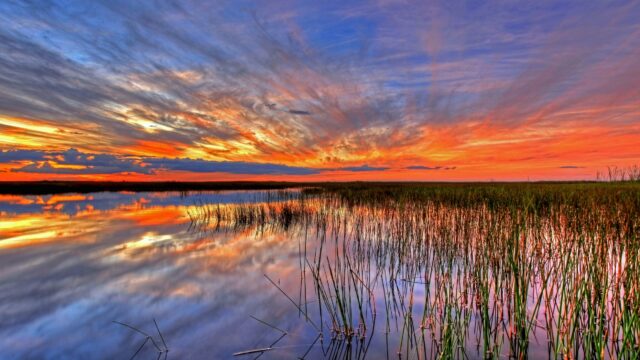
At 1.5 million acres, this is the largest subtropical wilderness in the United States and a Wetland of International Importance. Its mix of sawgrass marsh, mangrove forest, and coastal estuary supports manatees, roseate spoonbills, egrets, dolphins, ospreys, bald eagles, and alligators, alongside the threatened American crocodile and the endangered Florida panther.
Stop at a visitor center for orientation before setting out on nature trails like the Anhinga Trail, ride the Shark Valley tram for prime wildlife viewing, or take in the view from Pa-hay-okee Overlook. The park is a UNESCO World Heritage Site and an International Biosphere Reserve, and much of it is federally designated wilderness.
Dry Tortugas National Park
First charted by Ponce de León in 1513 (he called them “las tortugas” for the sea turtles he found there, with “dry” added later to warn sailors of the lack of fresh water), the Dry Tortugas are home to Fort Jefferson, one of the largest 19th-century American forts, built from roughly 16 million bricks and used as a Civil War military prison.
The remote, seven-island park — a roughly 70-mile boat or seaplane trip from Key West, Florida — is home to the only magnificent frigatebird nesting colony in the continental U.S. and offers some of Florida’s clearest snorkeling and paddling water.
Other National Park Service Sites Across Florida
Florida’s NPS sites extend far beyond its three national parks:
- Gulf Islands National Seashore (Gulf Breeze, Florida): Spanning barrier islands in Florida and Mississippi, this is one of the largest national seashores in the country, protecting sugar-white beaches and maritime forests alongside centuries of military history. Paddle, fish, snorkel or dive, camp, hike, and bike. Horn and Petit Bois Islands, Mississippi, are federally designated wilderness accessible only by boat. Explore four historic forts, including Fort Pickens and Fort Barrancas.
- Timucuan Ecological and Historic Preserve (Jacksonville, Florida): Protecting roughly 6,000 years of history — from the Timucua people to 1500s colonial settlers to Civil War-era plantation life — the preserve transitions from pine flatwoods to salt marshes to coastal beach. Hike, kayak, and fish, or visit the Kingsley Plantation, home to Florida’s oldest surviving plantation house and preserved slave cabins.
- Fort Caroline National Memorial (Jacksonville, Florida): This memorial marks the short-lived 1564 French colony, destroyed by Spanish forces from St. Augustine in 1565. The French returned in 1568 and massacred the Spanish garrison in retaliation. Ranger programs and trails cover this colonial rivalry and the site’s natural history along the St. Johns River.
- Castillo de San Marcos National Monument (St. Augustine, Florida): Completed in 1695, this is the oldest masonry fort in the continental U.S. and one of only two forts built from coquina shell rock, which absorbed cannon fire rather than shattering. Never taken by force, it has flown four flags: Spain, Great Britain, the Confederacy, and the U.S.
- Fort Matanzas National Monument (St. Augustine, Florida): Built by Spain in 1742 to guard St. Augustine’s southern approach, this coquina-built fort reflects the long Spanish-British struggle for Florida. The surrounding park preserves dunes, salt marsh, woodlands, and wetlands rich in shorebirds and marine life.
- Canaveral National Seashore (Titusville, Florida): Home to ancient Timucuan shell mounds and 24 miles of undeveloped beach, this is the longest stretch of undeveloped coastline on Florida’s Atlantic coast and vital nesting habitat for loggerhead, green, and leatherback sea turtles. Next door to Kennedy Space Center, it’s also one of the best public spots to watch a rocket launch.
- De Soto National Memorial (Bradenton, Florida): On Tampa Bay, this park commemorates Hernando de Soto’s 1539 landing and four-year, 4,000-mile expedition, during which he became the first European credited with reaching the Mississippi River. It tells his story and the wider impact of European exploration on Native peoples. Guided kayak tours and ranger programs are available.
- Big Cypress National Preserve (Ochopee, Florida): Established in 1974 as the first national preserve, Big Cypress protects 729,000 acres of cypress swamp, sawgrass prairie, and mangroves adjoining the Everglades — critical habitat for the endangered Florida panther, plus alligators, manatees, and roseate spoonbills. National Park Trust helped secure key acreage here, buying 18 private properties totaling 100 acres and consolidating them onto one deed to sell to the National Park Service.
Each of these places plays a role in protecting cultural heritage, coastal habitat, biodiversity, and public access.
Conservation & Stewardship
Florida’s public lands protect:
- Coral reef and marine ecosystems
- Subtropical wetlands and estuaries
- Barrier island and coastal dune habitat
- Colonial-era forts and cultural landmarks
- Critical habitat for the endangered Florida panther and the threatened American crocodile
But long-term protection depends on more than designation. It depends on connection.
When a student snorkels a reef in Biscayne, rides the tram through Shark Valley, or tours a centuries-old fort in St. Augustine, they gain firsthand experience with public lands. That experience often shapes how they view conservation and stewardship for years to come.
How National Park Trust Supports Parks in Florida
National Park Trust works nationwide to protect park land early and expand access so more people can experience America’s public lands.
In Florida, that includes:
- Supporting the protection of Big Cypress National Preserve, where National Park Trust bought 18 private properties totaling 100 acres between 1990 and 1992 and consolidated them onto one deed to sell to the National Park Service, reducing fragmented private holdings in habitat for the endangered Florida panther
- Supporting youth access initiatives across South Florida’s national parks
- Helping remove barriers to first-time park visits
- Partnering with communities to increase engagement with Florida’s coastal and wetland parks
By connecting young people and families to places like Everglades, Biscayne, and Big Cypress, we help build the next generation of park stewards.
Frequently Asked Questions About National Parks in Florida
How many national parks are in Florida? Florida has three national parks: Biscayne, Everglades, and Dry Tortugas. Eight more National Park Service sites bring the state’s total to 11.
What is the largest national park in Florida? Everglades National Park is the largest, at 1.5 million acres.
When is the best time to visit national parks in Florida? The dry season, roughly November through April, is the most popular time to visit South Florida’s parks, with milder temperatures and fewer mosquitoes. Check each park’s National Park Service page for current conditions before you go.
Does National Park Trust protect park land in Florida? Yes. National Park Trust bought 18 private properties totaling 100 acres inside Big Cypress National Preserve and sold them to the National Park Service.
Stay Connected to Conservation Efforts in Florida and Beyond
Protecting Florida’s national parks and historic sites requires ongoing care and community support.
If you care about the future of public lands in Florida — from the coral reefs of Biscayne Bay to the sawgrass prairies of the Everglades — we invite you to stay connected. Learn more about how you can support conservation efforts in Florida and across the country.
Together, we can help ensure these landscapes remain protected and accessible for generations to come.
National Park Trust in your state


| Site | Program | City |
|---|---|---|
| Children In Crisis, Inc. | Buddy Bison Schools | Fort Walton Beach, FL |
| SouthTech Academy | Buddy Bison Schools | Boynton Beach, FL |
| University of Florida | College Ambassador Schools | Gainesville, FL |
| Big Cypress National Preserve | National Park Sites | Ochopee, FL |
| Biscayne National Park | National Park Sites | |
| Canaveral National Seashore | National Park Sites | Titusville, FL |
| Castillo de San Marcos National Monument | National Park Sites | Augustine, FL |
| De Soto National Memorial | National Park Sites | |
| Dry Tortugas National Park | National Park Sites | |
| Everglades National Park | National Park Sites | |
| Fort Caroline National Memorial | National Park Sites | |
| Fort Matanzas National Monument | National Park Sites | Augustine, FL |
| Gulf Islands National Seashore | National Park Sites | Gulf Breeze, FL |
| Timucuan Ecological and Historic Preserve | National Park Sites | Jacksonville, FL |
| Big Cypress National Preserve | Parks We've Protected |
Protected Parks
-
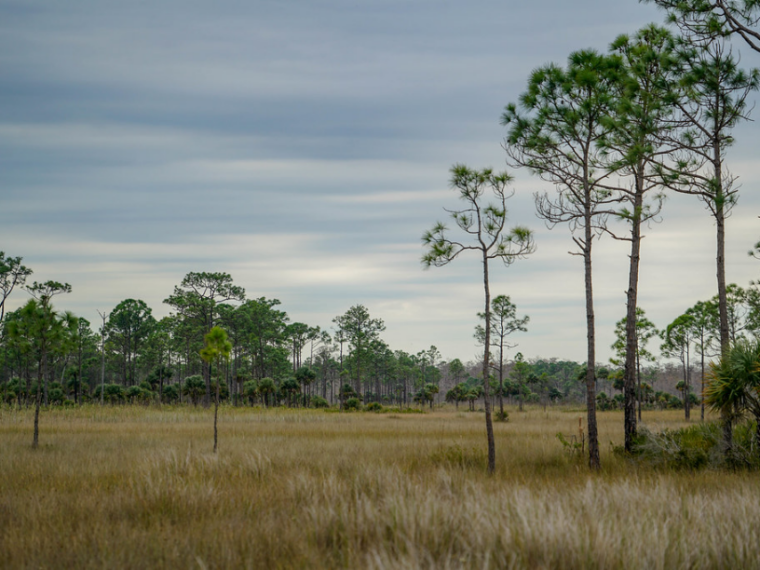
Big Cypress National Preserve, FL
The Park Trust obtained funds to buy 18 private properties totaling 100 acres at Florida's Big Cypress National Preserve.
Learn More about Big Cypress National Preserve, FL