
Washington National Parks & National Park Service Sites: A Complete Guide
Washington is home to three official national parks: Olympic National Park, North Cascades National Park, and Mount Rainier National Park. The state’s public lands extend well beyond those three. Across Washington State, the National Park Service also protects national historic sites, national recreation areas, a historical reserve, and sites tied to the Manhattan Project, the Klondike Gold Rush, and the Lewis and Clark expedition.
Together these places preserve the Pacific Northwest’s best-known landscapes: the temperate rainforest of the Olympic Peninsula, the glaciers of the Cascade Mountains, and the sea stacks of the Pacific coast. They also preserve cultural landmarks tied to Native peoples, fur traders, pioneers, and Japanese American incarceration during World War II.
At National Park Trust, an independent 501(c)(3) nonprofit dedicated to protecting parks early and expanding access, we believe these places matter for long-term stewardship as well as recreation. People who hike a trail or stand among old-growth forests are more likely to care about protecting them.
How Many National Park Service Sites Are in Washington?
Washington has:
- 3 National Parks
- 12 additional National Park Service sites
These include:
- National recreation areas such as Ross Lake, Lake Chelan, and Lake Roosevelt
- Historic sites such as Fort Vancouver National Historic Site and Whitman Mission National Historic Site
- Historical parks such as San Juan Island National Historical Park, Lewis and Clark National Historical Park, Manhattan Project National Historical Park, and Klondike Gold Rush National Historical Park (Seattle Unit)
- A historical reserve: Ebey’s Landing National Historical Reserve on Whidbey Island in Puget Sound
- Cultural landmarks such as Minidoka National Historic Site and Nez Perce National Historical Park
Together, these places tell the ecological and cultural story of Washington State.
The Three National Parks in Washington
Olympic National Park (Port Angeles, Washington): In a single trip, you can walk the wild Pacific coast, explore a temperate rainforest, and hike in the high Olympic Mountains. The park covers much of the Olympic Peninsula in northwest Washington, and its three very different ecosystems sit within a couple of hours’ drive of one another.
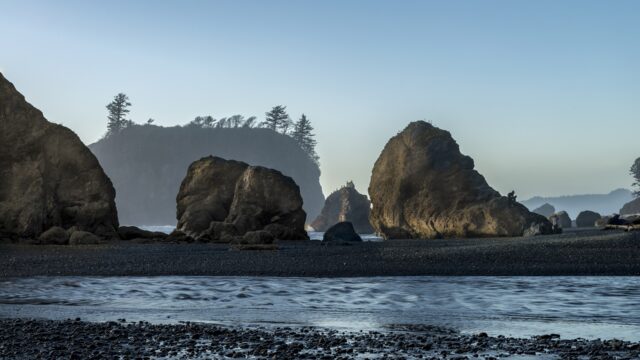
Along the Pacific coast, Ruby Beach and Kalaloch Beach are known for their sea stacks, driftwood, and tide pools. Low tide is the best time to explore the tide pools, where visitors can find sea stars, anemones, and other marine life. The beaches are also popular at sunset, when the sea stacks stand out against the horizon.
Inland, the Hoh Rainforest near Forks is among the best places in the country to see old-growth forest, with Sitka spruce and western hemlock reaching 250 feet and moss hanging from the branches. Lake Quinault, on the park’s southwest side, offers quieter rainforest trails. Lake Crescent, a deep, clear glacial lake, sits along the park’s northern edge, and in the nearby Sol Duc Valley, a short trail leads to Sol Duc Falls, one of the park’s most photographed waterfalls. In the high country, Hurricane Ridge, reached by road from Port Angeles, offers summer wildflower meadows and views across the Olympic Mountains.
North Cascades National Park (Sedro-Woolley, Washington): North Cascades is a rugged alpine park in northern Washington, defined by jagged peaks, glaciers, and deep valleys. It holds hundreds of glaciers, more than any other national park in the lower 48 states, and its steep terrain and dense forest make much of it remote. The park is best explored on foot, and backpacking or horse packing is the way to reach its most secluded areas. Travelers who prefer shorter trips will still find plenty to do, since many trailheads sit along the North Cascades Highway (State Route 20).
The Cascade Pass trail is one of the park’s classic day hikes. It climbs through forest and then open switchbacks to a high pass, where hikers get sweeping views of glaciated peaks and the valleys below. In early fall, the high country draws a second wave of visitors when the subalpine larches turn gold. Unlike most conifers, larches shed their needles each year, and their golden color against the rock and snow makes the season one of the most photographed times in the park.
The park is also home to a wide range of wildlife, including gray wolves, Canada lynx, hoary marmots, and pikas. The marmots and pikas are common sights in rocky alpine meadows, while the wolves and lynx are elusive and rarely seen. Grizzly bears have been nearly eliminated from the North Cascades. A 2024 federal plan calls for restoring them, but as of 2025 no bears had been moved, so the future of the species here remains an open question.
Mount Rainier National Park (Ashford, Washington): At more than 14,000 feet, Mount Rainier is an active volcano and the highest peak in the Cascades. It sits in western Washington and dominates the surrounding landscape, rising above forests, waterfalls, and wildflower meadows. The mountain carries 25 major glaciers, more than any other mountain in the lower 48 states, and the ice feeds several major rivers that begin on its slopes.
The park’s alpine and subalpine meadows and woods are home to mountain lions, martens, and fishers. These animals need large areas of land uninterrupted by development to survive, which makes the park’s protected acreage especially important for them. Northern spotted owls and Cascade red foxes also inhabit the park, though neither is common. The owls depend on older forests with large trees, while the foxes live mostly in the high country near the tree line, so both are seldom seen by visitors.
Other National Park Service Sites Across Washington
Washington’s National Park Service sites reach well beyond the three national parks:
- Fort Vancouver National Historic Site (Vancouver, Washington): Preserves the Hudson’s Bay Company fur trading headquarters founded in 1824, a major hub in the Pacific Northwest before the California Gold Rush. Living history demonstrations show the work of bakers, carpenters, and blacksmiths, and there is a nighttime candle lantern tour of the fort.
- Whitman Mission National Historic Site (Walla Walla, Washington): Marks the site where Dr. Marcus Whitman and his wife, Narcissa, established a mission among the Cayuse people in 1836. Miscommunication, increased migration from the east, and disease, including a deadly measles outbreak, caused tension and ultimately led to the deaths of the Whitmans in 1847.
- San Juan Island National Historical Park (Friday Harbor, Washington): Marks the 1859 “Pig War,” when the United States and Great Britain nearly went to war over the island after an American settler shot a pig belonging to the British Hudson’s Bay Company. The park was created in 1966 based on the idea that individuals and nations can solve their problems peacefully without resorting to violence.
- Ebey’s Landing National Historical Reserve (Coupeville, Washington): A rural historic district on Whidbey Island that preserves an unbroken historical record of Puget Sound exploration and settlement from the 19th century to today, including the story of early settlement by Col. Isaac Ebey, an important figure in the growth of Washington Territory.
- Ross Lake National Recreation Area (Rockport, Washington): Centers on the Skagit River, which has been dammed to form Gorge, Diablo, and Ross lakes. Diablo Lake sits along State Route 20, and the north end of Ross Lake is reached by road through Canada. Other access to Ross Lake is by trail from State Route 20 or by a roughly 5-mile boat trip across Diablo Lake, followed by a portage around Ross Dam.
- Lake Chelan National Recreation Area (Stehekin, Washington): Bring your bike or rent one for a ride on the Stehekin Valley Road. View Lake Chelan and watch for spawning kokanee salmon on the Stehekin River. Hiking and backpacking trails in the park lead to a variety of areas, including U.S. Forest Service wilderness and North Cascades National Park. Transportation to the park is by boat, plane, horse, or on foot.
- Lake Roosevelt National Recreation Area (Hunters, Washington): Formed on the Columbia River by Grand Coulee Dam. The landscape shifts from sagebrush desert in the south to Douglas fir and ponderosa pine upriver. Fishing for walleye, trout, and kokanee is popular.
- Manhattan Project National Historical Park (Richland, Washington): Commemorates the people, science, and engineering behind the atomic bomb. Its use helped end World War II and represents the dawn of the Atomic Age. The park is three separate sites spanning three states: Washington, New Mexico, and Tennessee.
- Lewis and Clark National Historical Park (Chinook, Washington): Commemorates the Corps of Discovery expedition commissioned by Thomas Jefferson. Meriwether Lewis and William Clark, two of America’s most famous explorers, led the nearly two-and-a-half-year expedition. The park includes 12 sites along about 40 miles of the Pacific coast in Oregon and Washington.
- Klondike Gold Rush National Historical Park – Seattle Unit (Seattle, Washington): Commemorates the Klondike Gold Rush of the late 1890s and Seattle’s role as the outfitting hub for prospectors. The Seattle Unit, in the Pioneer Square Historic District, tells that story through exhibits, while the park’s units in Skagway, Alaska, preserve the historic Chilkoot and White Pass trails that prospectors used to reach the goldfields.
- Bainbridge Island Japanese American Exclusion Memorial (Bainbridge Island, Washington): Part of Minidoka National Historic Site, this memorial on Bainbridge Island in Washington’s Puget Sound commemorates the 227 Bainbridge Island residents of Japanese descent who, after the attack on Pearl Harbor, became the first in the country to be removed from their homes and incarcerated during World War II. They were sent first to Manzanar in California, and many later transferred to Minidoka in Idaho. The memorial stands near the site where they boarded a ferry on their way to incarceration. Visitors can walk its path and view a wall engraved with the names of those removed.
- Nez Perce National Historical Park (Asotin, Washington): Honors the nimíipuu (Nez Perce) people, their homelands, and the trails they traveled. It includes dozens of sites spread across four states: Idaho, Washington, Oregon, and Montana. Visitors can explore these places to learn about the Nez Perce, their culture, and their history, including the 1877 flight of several bands as they sought freedom, which is remembered along the Nez Perce National Historic Trail.
Each of these places plays a role in protecting cultural heritage, scenic rivers, biodiversity, and public access.
Exploring Washington’s Parks by Region
Many visitors build a trip around the National Park Service sites in one part of the state:
- Seattle and Puget Sound: Seattle is the gateway for Mount Rainier, the Olympic Peninsula, and the North Cascades, and home to the Klondike Gold Rush Seattle Unit. Ferries connect Puget Sound to Whidbey Island and the San Juan Islands.
- Olympic Peninsula: Port Angeles, Forks, and Lake Quinault are the main bases for exploring the coast, rainforest, and mountains.
- Cascade Mountains: Ashford (Mount Rainier), Winthrop (North Cascades Highway), and the Bavarian-style town of Leavenworth serve as bases for mountain trips. Mount Baker and Mount St. Helens, both managed by the U.S. Forest Service, make good additions.
- Columbia River Gorge: Along the Washington–Oregon border, the gorge offers waterfalls, wind-carved cliffs, and views near Fort Vancouver.
Conservation & Stewardship
Washington’s public lands protect:
- Temperate rainforest and old-growth forests
- Glaciers and alpine ecosystems
- Pacific coast habitat
- Scenic river and lake corridors
- Cultural and historic landmarks
Long-term protection depends on more than designation. It depends on connection.
When a student explores tide pools at Kalaloch, hikes to Sol Duc Falls, or walks through the reconstructed fort at Fort Vancouver, they gain firsthand experience with public lands. That experience often shapes how they view conservation and stewardship for years to come.
How National Park Trust Supports Parks in Washington
National Park Trust works nationwide to protect park land early and expand access so more people can experience America’s public lands.
In Washington, that includes:
- Protecting old-growth rainforest shoreline on the north shore of Lake Quinault in Olympic National Park, including 15 lots totaling 6.22 acres acquired in 1990 and a parcel of just under half an acre acquired in 2017
- Preserving the 1857 Haller House and its Penn Cove shoreline at Ebey’s Landing National Historical Reserve, working with Historic Whidbey, the National Park Foundation, the National Park Service, and local partners
- Supporting youth access initiatives
- Helping remove barriers to first-time park visits
- Elevating awareness around the importance of long-term protection
- Partnering with communities to increase engagement
By connecting young people and families to places like Olympic, North Cascades, and Mount Rainier, we help build the next generation of park stewards.
Frequently Asked Questions About National Parks in Washington
How many national parks are in Washington? Washington has three national parks: Olympic, North Cascades, and Mount Rainier. Twelve more National Park Service sites bring the state’s total to 15.
What is the largest national park in Washington? Olympic National Park is the largest, covering nearly 1 million acres of the Olympic Peninsula.
When is the best time to visit national parks in Washington? Summer, roughly July through September, is when high-country roads and trails are most reliably free of snow. Olympic’s coast and rainforest can be visited year-round, so check each park’s National Park Service page for current conditions before you go.
Has National Park Trust protected park land in Washington? Yes. National Park Trust has protected land on Lake Quinault in Olympic National Park and helped preserve the historic Haller House at Ebey’s Landing National Historical Reserve.
Stay Connected to Conservation Efforts in Washington and Beyond
Protecting Washington’s national parks and historic sites requires ongoing care and community support.
If you care about the future of public lands in Washington, from the Olympic Peninsula coast to the Cascade Mountains, we invite you to stay connected. Learn more about how you can support conservation efforts in Washington and across the country.
Together, we can help ensure these landscapes remain protected and accessible for generations to come.
National Park Trust in your state


| Site | Program | City |
|---|---|---|
| Frontier Middle School | Buddy Bison Schools | Moses Lake, WA |
| MLK Jr. Elementary School | Buddy Bison Schools | Seattle, WA |
| Western Washington University | College Ambassador Schools | Bellingham, WA |
| Ebey's Landing Historical Reserve | National Park Sites | |
| Fort Vancouver National Historic Site | National Park Sites | Vancouver, WA |
| Klondike Gold Rush National Historical Park - Seattle Unit | National Park Sites | Seattle, WA |
| Lake Chelan National Recreation Area | National Park Sites | Stehekin, WA |
| Lake Roosevelt National Recreation Area | National Park Sites | Hunters, WA |
| Lewis and Clark National Historic Trail | National Park Sites | Ridgefield, WA |
| Manhattan Project National Historical Park | National Park Sites | Hanford, WA |
| Mount Rainier National Park | National Park Sites | |
| North Cascades National Park | National Park Sites | Sedro-Woolley, WA |
| Olympic National Park | National Park Sites | Port Angeles, WA |
| Ross Lake National Recreation Area | National Park Sites | Rockport, WA |
| San Juan Island National Historical Park | National Park Sites | Friday Harbor, WA |
| Whitman Mission National Historic Site | National Park Sites | Walla Walla, WA |
| Ebey's Landing National Historical Reserve | Parks We've Protected | Coupeville, WA |
| Olympic National Park (1990 & 2017) | Parks We've Protected | Lake Quinault, WA |
Protected Parks
-
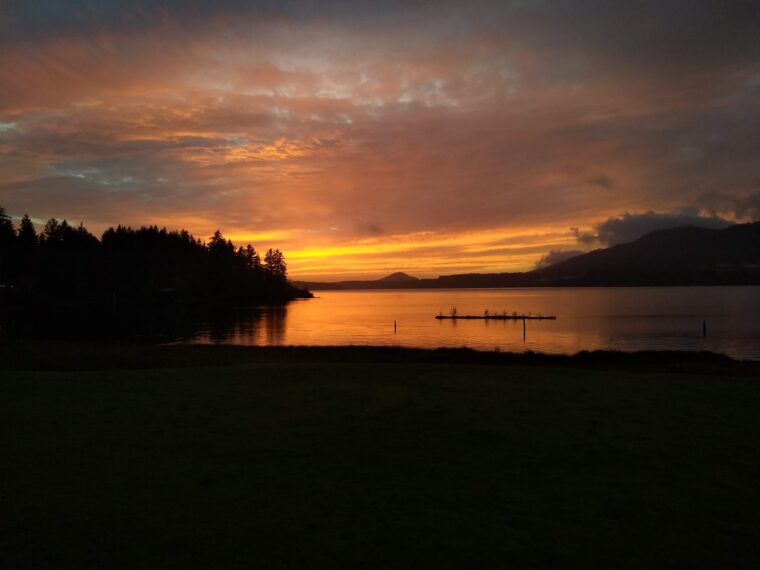
Olympic National Park, WA (1990)
The Park Trust 6.22 acres on the north shore of Lake Quinault in Olympic NP and transferred it to the NPS.
Learn More about Olympic National Park, WA (1990) -
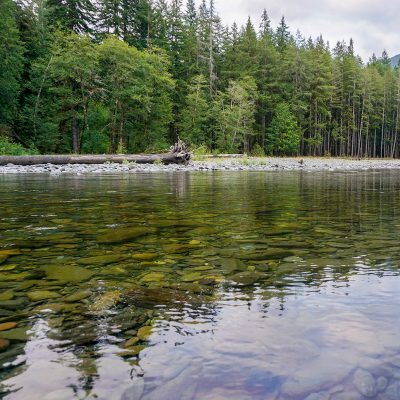
Olympic National Park, WA (2017)
In December 2017, the Park Trust completed the acquisition of a parcel of land on Lake Quinault in Olympic National Park (WA) – just under 0.5 acres. Although small in size, it is big in ecological significance. The parcel was surrounded on three sides by Olympic National Park; it was the only parcel in that block that did not belong to the National Park Service. Its acquisition will keep it in its natural state by preventing further development.
Learn More about Olympic National Park, WA (2017) -
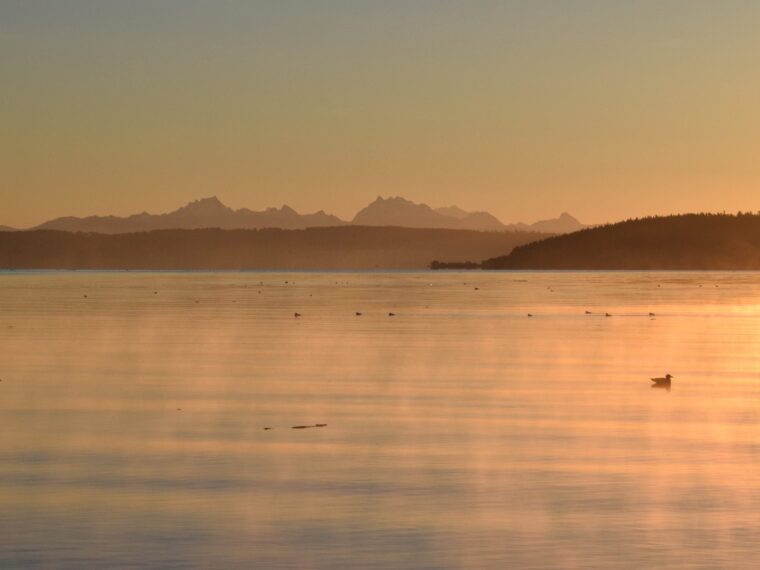
Ebey’s Landing National Historical Reserve, WA
In 1978, Ebey’s Landing in Washington state was established as Ebey's Landing National Historical Reserve. Fast forward 40 years to 2018, National Park Trust worked with Historic Whidbey, National Park Foundation, National Park Service, & numerous local partners to add land and property to this NHR.
Learn More about Ebey’s Landing National Historical Reserve, WA